Delhi Riots Case: Court Convicts Tahir Hussain, Four Others in Ankit Sharma Murder Trial
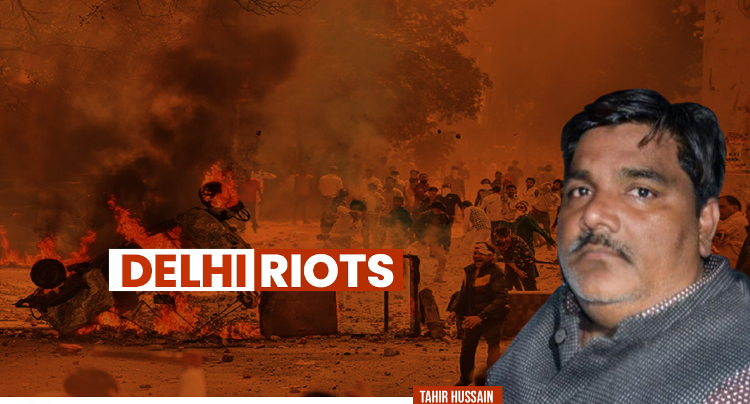
More than six years after the 2020 North-East Delhi riots, a Delhi court has delivered one of the most significant verdicts linked to the violence. Former Aam Aadmi Party (AAP) councillor Tahir Hussain and four other accused have been convicted in the murder of Intelligence Bureau (IB) staffer Ankit Sharma, while six other accused have been acquitted due to insufficient evidence.
The judgment marks an important milestone in the long-running legal process surrounding one of the most high-profile cases arising from the riots, although further legal proceedings, including sentencing and possible appeals, are expected.
What Happened?
A special court at Delhi’s Karkardooma Courts found former AAP councillor Tahir Hussain guilty of multiple offences, including murder, rioting, unlawful assembly and promoting enmity. The court also convicted Javed, Anas, Nazim and Kasim in the same case.
At the same time, six other accused were acquitted after the court concluded that the evidence presented against them was not sufficient to establish guilt beyond reasonable doubt. The court also acquitted Hussain of the charge of criminal conspiracy while convicting him on several other charges.
The case relates to the death of Intelligence Bureau employee Ankit Sharma during the communal violence that erupted in North-East Delhi in February 2020.
How Credible Is This Development?
This is a confirmed judicial development, not a political claim or media allegation.
The verdict has been delivered by a Delhi trial court after years of investigation, witness testimony, forensic examination and court proceedings. It has been reported by multiple established news organisations based on official court records.
However, this is not necessarily the final legal chapter. Convicted persons retain the right to challenge the judgment before higher courts, making the appellate process an important next step.
Background: Why This Case Became Nationally Important
The North-East Delhi riots in February 2020 were among the country’s most serious episodes of communal violence in recent years. The clashes resulted in dozens of deaths, hundreds of injuries and widespread destruction of homes, businesses and public property.
Ankit Sharma’s death attracted nationwide attention because he served with the Intelligence Bureau and because of the circumstances in which his body was recovered during the violence. His father had alleged that Tahir Hussain and others were responsible for the killing, leading to the criminal investigation that ultimately resulted in the present conviction.
The verdict is also significant because it represents one of the first major murder convictions arising from the 2020 Delhi riots.
Why Does This Verdict Matter?
The judgment is important for several reasons:
- It reflects years of judicial examination of evidence in one of the most closely watched riot-related criminal cases.
- It demonstrates how complex riot investigations often require lengthy trials before courts reach conclusions.
- The verdict may influence public confidence in the legal process surrounding the broader Delhi riots cases.
- It reinforces the principle that criminal liability is determined through judicial proceedings rather than public or political opinion.
The decision also highlights that courts may convict some accused while acquitting others if the available evidence differs from person to person.
Who Is Affected?
The Victim’s Family
For Ankit Sharma’s family, the conviction represents a major development after years of legal proceedings, although the judicial process is not yet fully complete.
The Convicted Individuals
Those convicted now face sentencing and may pursue appeals before higher courts.
Political Stakeholders
Since Tahir Hussain was formerly associated with the Aam Aadmi Party, the verdict is likely to remain politically significant. However, the court’s decision is a legal determination based on the evidence before it and should not be viewed as a finding against any political party.
The Justice System
The judgment is another important step in addressing cases arising from the 2020 riots, many of which have taken years to progress through the courts.
Possible Immediate and Long-Term Impact
Immediate Effects
- Sentencing proceedings will follow.
- Appeals are likely to be filed by the convicted persons.
- Public and political debate around the 2020 riots may intensify following the judgment.
Long-Term Effects
- The verdict may influence how remaining riot-related cases are viewed, although each case will continue to be decided independently on its own evidence.
- It may encourage closer public scrutiny of riot investigations, prosecution standards and the pace of India’s criminal justice system.
- The judgment could become an important legal reference in discussions about accountability during communal violence.
How Are Different Stakeholders Responding?
The Judiciary
The court has completed its examination of evidence in this trial and delivered a reasoned verdict, convicting some accused while acquitting others.
Investigation Agencies
The conviction indicates that the prosecution succeeded in proving parts of its case against certain accused, though not against everyone originally charged.
Political Reactions
Given Hussain’s previous political background, reactions from political parties are expected. However, legal experts generally caution against interpreting trial court verdicts through a purely political lens, particularly while appellate remedies remain available.
The Public
The case continues to generate strong public interest because it relates to one of the most sensitive episodes in recent Indian history. Opinions remain divided, but the legal process—not public sentiment—ultimately determines criminal responsibility.
What Should Readers Expect Next?
The conviction does not conclude the entire legal process.
The next stages are likely to include:
- The court determining the sentence.
- Appeals before the Delhi High Court or higher courts.
- Continued proceedings in other cases connected to the 2020 Delhi riots, each based on its own evidence and legal merits.
Readers should expect further judicial developments rather than viewing the current verdict as the final outcome of every legal issue connected to the riots.
Key Takeaways
- A Delhi trial court has convicted former AAP councillor Tahir Hussain and four others in the murder of Intelligence Bureau staffer Ankit Sharma during the 2020 North-East Delhi riots, while acquitting six other accused due to insufficient evidence.
- The judgment is a confirmed legal development following years of investigation and trial, but the convicted individuals retain the right to appeal before higher courts.
- The verdict marks a significant milestone in the judicial response to the 2020 Delhi riots, while many other riot-related cases continue to move through the legal system.