Trump Says Iran Is Seeking a Settlement as Fresh US Strikes Continue: What the Latest Escalation Means
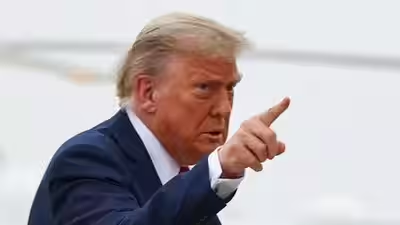
The United States and Iran remain locked in a period of heightened military and diplomatic tension, with US President Donald Trump claiming that Tehran wants to return to negotiations even as American forces continue fresh military strikes.
The latest developments highlight the complex situation in which military pressure and diplomatic messaging are unfolding at the same time, leaving uncertainty over whether the crisis will move toward negotiations or further escalation.
What Happened?
President Donald Trump said Iran is interested in reaching a settlement with the United States but warned that any future discussions would depend on Tehran’s conduct, stating that Iran “better behave.”
His remarks came shortly after the US launched another round of strikes targeting Iranian military-related capabilities. According to US officials, these operations are aimed at reducing Iran’s ability to threaten regional security and international shipping routes.
Iran has continued to oppose the military action and has previously accused Washington of violating understandings intended to reduce tensions. The situation remains fluid, with military activity continuing alongside public statements about possible diplomacy.
How Credible Is This Development?
The military strikes and President Trump’s public remarks are confirmed through official statements from the US administration and have been widely reported by multiple international news organisations.
However, one important point remains unclear.
While President Trump has said Iran wants a negotiated settlement, Iranian officials have not publicly confirmed the claim in the same terms. Earlier statements from Tehran have suggested that negotiations depend on broader political and military conditions, meaning there is currently no independently verified confirmation that both sides share the same understanding of possible talks.
This means readers should distinguish between confirmed military events and political claims that have yet to receive matching confirmation from both governments.
Why Does This Matter?
The confrontation extends far beyond relations between Washington and Tehran.
The United States and Iran have spent decades in conflict over issues including Iran’s nuclear programme, regional influence, sanctions, and military activities across the Middle East.
The current tensions also affect one of the world’s most strategically important regions. Any disruption around the Persian Gulf and the Strait of Hormuz—a narrow sea route through which a significant share of global oil exports passes—can influence international energy prices and global trade.
For many countries, the outcome is not only a security issue but also an economic concern.
Who Could Be Affected?
Several groups could experience the consequences of prolonged tensions.
Countries in the Middle East
- Increased military activity raises regional security risks.
- Neighbouring countries may face pressure to strengthen defence measures.
Global Energy Markets
- Oil prices often react quickly when conflict threatens major shipping routes.
- Higher crude oil prices can eventually affect fuel and transportation costs worldwide.
International Businesses
- Shipping companies and insurers may face higher operational costs if maritime risks increase.
Ordinary Consumers
- Rising energy costs can eventually influence inflation and the prices of everyday goods in many countries.
Diplomatic Pressure Continues Alongside Military Action
One notable feature of the current situation is that military operations have not completely replaced diplomacy.
US officials continue to indicate that negotiations remain possible under certain conditions, while also maintaining military pressure on Iran. President Trump’s latest comments appear to reinforce this dual strategy of combining force with calls for renewed talks.
Whether this approach encourages negotiations or hardens positions remains uncertain.
Different Stakeholders View the Situation Differently
United States
The US administration argues that military action is intended to reduce security threats and encourage Iran to change its behaviour before meaningful negotiations can resume.
Iran
Iran has repeatedly criticised US military operations and sanctions, maintaining that American actions undermine diplomatic efforts. Iranian officials have not fully endorsed President Trump’s latest description of ongoing contacts.
International Community
Many governments are expected to continue urging restraint, as a wider regional conflict could have humanitarian, economic and geopolitical consequences extending well beyond the Middle East.
Analysis: What Could Happen Next?
Confirmed Facts
- US military operations are continuing.
- President Trump says Iran is interested in a settlement.
- No comprehensive agreement has been announced.
Analysis
Several scenarios remain possible:
- Diplomatic contacts could continue while military operations remain limited.
- Additional strikes or retaliation could delay negotiations.
- International mediation efforts may increase if tensions continue rising.
- Energy markets are likely to remain sensitive until there is greater clarity on regional stability.
At present, there is no indication that a lasting settlement has been reached.
What Should Readers Watch Next?
Key developments likely to shape the coming days include:
- Whether Iran publicly confirms any renewed diplomatic engagement.
- Any announcement of formal negotiations between Washington and Tehran.
- Changes in military activity around strategic Gulf shipping routes.
- Reactions from major global powers and international organisations.
- The impact on oil prices and global financial markets.
Key Takeaways
- President Donald Trump says Iran is seeking a negotiated settlement even as fresh US military strikes continue, but Tehran has not publicly confirmed the claim in the same terms.
- The situation remains highly fluid, with diplomacy and military operations unfolding simultaneously.
- The broader implications extend beyond US-Iran relations, potentially affecting regional security, global energy supplies and international markets if tensions continue to rise.