Puri Rath Yatra Crowd Surge: What Happened, Why It Matters, and What Comes Next
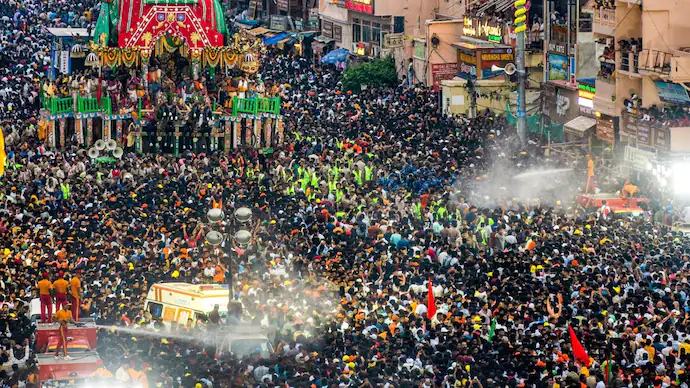
The annual Jagannath Rath Yatra in Odisha’s Puri witnessed a tragic crowd surge on Thursday, leaving at least one devotee dead and around 100 others injured or unwell. The incident occurred during one of India’s largest religious gatherings, raising fresh concerns about crowd management despite extensive security preparations.
As officials assess what led to the incident, the focus has shifted from the celebrations to questions about public safety, emergency response, and whether enough was done to prevent another tragedy at the famous pilgrimage.
What Happened During the Rath Yatra?
The incident took place on Puri’s Grand Road (Bada Danda), where lakhs of devotees had gathered to witness the ceremonial movement of the chariots of Lord Jagannath, Lord Balabhadra, and Goddess Subhadra.
According to official information available so far, a sudden crowd surge created a stampede-like situation. One devotee reportedly died after experiencing severe breathing difficulties in the dense crowd, while around 100 others suffered injuries or health-related complications. Many were taken to nearby hospitals, with several requiring medical treatment.
Emergency personnel, police, and medical teams responded quickly to assist affected devotees and restore order.
Is the Information Confirmed?
Yes, the incident itself has been confirmed by officials and multiple established news organisations.
However, some details are still evolving:
- Authorities have confirmed at least one death.
- Around 100 people were reported injured or taken ill.
- Officials have not yet released a final investigation explaining the exact cause of the crowd surge.
- Different media reports vary slightly on hospital admissions and casualty figures because the situation continued to develop after the incident.
Until the official inquiry is completed, conclusions about responsibility or specific failures remain premature.
Why Is the Rath Yatra So Challenging to Manage?
The Jagannath Rath Yatra is among India’s largest annual religious events, attracting devotees from across the country and abroad.
Managing such gatherings presents unique challenges:
- Millions of people may arrive over the festival period.
- Movement often becomes concentrated near the chariots.
- Weather conditions, including rain, can reduce mobility.
- Emotional and religious enthusiasm may cause sudden crowd movement.
- Medical emergencies become harder to handle in densely packed areas.
Even with thousands of security personnel deployed, maintaining safe crowd flow remains extremely difficult during peak moments of the procession.
Why Does This Incident Matter Beyond Odisha?
The tragedy is significant because it highlights an issue that extends beyond a single festival.
India regularly hosts some of the world’s largest religious gatherings, where crowd management becomes as important as security.
Large public events require:
- Better movement planning
- Real-time crowd monitoring
- Faster emergency medical access
- Clear evacuation routes
- Effective communication with devotees
Whenever accidents occur at mass gatherings, they often trigger discussions about whether existing safety protocols are sufficient.
Who Is Most Affected?
The immediate impact falls on:
- Devotees and their families
- People who sustained injuries
- Local healthcare services handling emergency treatment
- Authorities responsible for managing the festival
The incident may also affect public confidence among pilgrims planning future visits, although the cultural and religious importance of the Rath Yatra remains unchanged.
How Are Leaders and Authorities Responding?
Government agencies have begun reviewing the circumstances surrounding the crowd surge.
Political leaders have expressed condolences for the deceased and wished injured devotees a speedy recovery. There have also been calls for a detailed assessment of crowd management arrangements to reduce the risk of similar incidents in the future.
Emergency services continued assisting affected devotees while authorities monitored the remaining festival activities.
Could This Lead to Changes?
While no policy decisions have been announced yet, incidents of this nature often result in reviews of public event management.
Possible areas that may receive greater attention include:
- Improved crowd-density monitoring
- Better use of surveillance technology
- Stronger emergency medical deployment
- Revised entry and exit routes
- Updated disaster-response protocols
- Additional training for security personnel
Any long-term changes will likely depend on the findings of the official inquiry.
What Should Visitors Expect Next?
Authorities are expected to:
- Complete a formal investigation into the incident.
- Release more detailed information about casualties and medical treatment.
- Review security arrangements for the remaining festival events.
- Consider recommendations to strengthen safety measures at future Rath Yatras.
For devotees attending large religious gatherings anywhere in the country, officials typically advise following designated routes, avoiding overcrowded areas, and cooperating with police and emergency personnel.
Key Takeaways
- A crowd surge during the Jagannath Rath Yatra in Puri resulted in at least one confirmed death and around 100 people being injured or taken ill.
- The exact cause of the incident is still under official examination, and authorities are expected to review crowd management arrangements.
- The tragedy has renewed attention on the challenges of safely managing India’s largest religious gatherings while ensuring that millions of devotees can participate without unnecessary risk.