Sonam Wangchuk Hospitalised After 21-Day Hunger Strike as Jantar Mantar Protest Intensifies
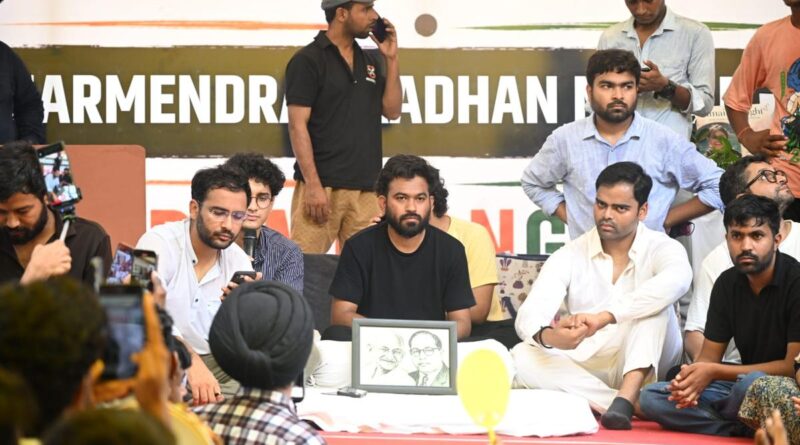
Students and supporters gathered at Delhi’s Jantar Mantar on Saturday as concerns over activist Sonam Wangchuk’s health grew during his indefinite hunger strike. The development has brought renewed attention to the ongoing protest, with both the demonstrators and authorities presenting different accounts of what happened at the protest site.
What Happened?
Climate activist and education reform advocate Sonam Wangchuk was taken to a government hospital in Delhi after completing 21 days of an indefinite hunger strike. According to Delhi Police, the decision was made following medical advice and directions linked to court proceedings because his health had significantly deteriorated. Authorities said the move was necessary to ensure he received immediate medical care.
Supporters at the protest site, however, alleged that Wangchuk was removed against his wishes and claimed police also dispersed demonstrators. Some protest organisers further alleged that students were manhandled during the operation. At the time of reporting, these allegations had not been independently verified by authorities.
How Credible Is This Development?
The hospitalisation of Sonam Wangchuk has been officially confirmed by police and hospital authorities, making this a confirmed development.
However, several other claims—including allegations of excessive police force, attacks on protesters, and disruption of the demonstration—remain disputed. Protest organisers have made these allegations publicly, while police have maintained that their actions were taken solely to protect Wangchuk’s health and comply with legal directions.
As the situation continues to evolve, some details remain subject to further official clarification.
Why Is This Protest Taking Place?
The ongoing protest centres on demands for greater accountability in India’s education system following controversies surrounding competitive examinations earlier this year.
Participants have called for stronger safeguards against examination irregularities, greater transparency in recruitment and testing processes, and accountability from those responsible for alleged failures. Wangchuk joined the agitation as a prominent public figure, arguing that education reforms deserve sustained national attention.
For many students, the issue extends beyond one examination. It reflects wider concerns about trust in competitive exams that influence admissions, careers and government recruitment.
Why Does This Matter?
Competitive examinations affect millions of students every year. Any loss of confidence in the examination process can have long-lasting consequences for students, families and educational institutions.
The protest has therefore become larger than a single hunger strike. It has sparked debate over:
- Public trust in examination systems.
- Government accountability.
- Student welfare and mental health.
- The role of peaceful public protests in a democracy.
The incident also raises questions about how authorities balance public safety with citizens’ right to protest.
Who Is Affected?
Several groups could be impacted by developments surrounding the protest.
Students
- Many protesters believe reforms are necessary to restore confidence in national examinations.
Government
- Authorities face increasing pressure to address public concerns while maintaining law and order.
Educational Institutions
- Universities and examination bodies may face greater demands for transparency and stronger security measures.
General Public
- The protest has reopened broader discussions about fairness, governance and institutional credibility.
Reactions From Different Stakeholders
The response has varied across stakeholders.
Delhi Police
Police said Wangchuk was shifted to hospital based on medical advice because his condition had worsened after prolonged fasting. Officials stated the intervention was intended to protect his health.
Protest Organisers
Organisers criticised the police action, alleging Wangchuk was forcibly removed and that protesters were prevented from continuing their demonstration. They have announced plans to continue the movement despite the hospitalisation.
Opposition Leaders
Several opposition leaders have previously visited the protest site and urged the government to engage in dialogue with protesters instead of allowing the confrontation to escalate.
Could This Lead to Policy Changes?
It is too early to predict whether the protest will directly result in policy decisions.
However, sustained public attention could increase pressure for:
- More transparent examination procedures.
- Stronger anti-paper leak mechanisms.
- Independent oversight of national examinations.
- Greater engagement between policymakers and student groups.
Whether these demands translate into official reforms will depend on future government decisions and ongoing public dialogue.
What Should Readers Expect Next?
Several developments are likely over the coming days:
- Updates on Sonam Wangchuk’s medical condition.
- Continued demonstrations by supporters.
- Possible discussions between protest representatives and government authorities.
- Increased political debate as Parliament prepares to convene.
The situation remains fluid, and official statements from both authorities and protest organisers will be important in understanding how events unfold.
Key Takeaways
- Sonam Wangchuk has been admitted to hospital after his health deteriorated during a 21-day hunger strike, a move authorities say was medically necessary.
- Protest organisers dispute the circumstances of his removal and intend to continue their campaign for education reforms.
- The larger debate now extends beyond one protest, focusing on trust in India’s examination system, government accountability and the handling of peaceful public demonstrations.