Rahul Gandhi Raises Fresh Questions Over Exam Paper Leaks, Calls for Student-Centric Reforms
India’s examination system has once again become the centre of political debate after Leader of Opposition Rahul Gandhi alleged that competitive exam question papers are being sold for fixed prices and that advanced technology is being used to facilitate paper leaks. His remarks have renewed discussions about the credibility of high-stakes examinations and the need for stronger safeguards.
While the allegations have drawn widespread attention, many of the specific claims made during his speech have not been independently verified. The issue is likely to remain under scrutiny as political parties, students and education authorities continue debating the integrity of India’s examination system.
What Happened?
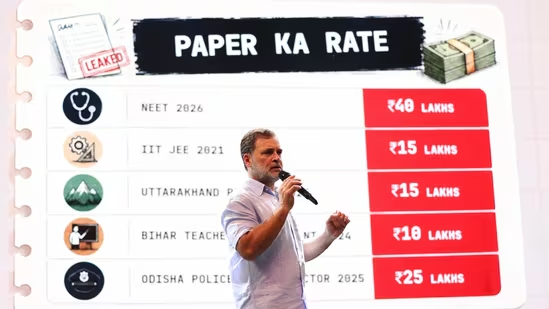
Speaking at the “Chhatron Ki Goonj” programme in Dehradun, Rahul Gandhi criticised the functioning of India’s competitive examination system. During his address, he displayed a presentation claiming that leaked examination papers are available at fixed prices for different recruitment and entrance examinations.
Among the figures shown was an alleged price of ₹40 lakh for the NEET-UG question paper. He also claimed that sophisticated digital technology is increasingly being used to carry out paper leaks, making the problem more organised than before.
Gandhi argued that repeated examination leaks have damaged public trust and placed honest students at a disadvantage.
How Credible Are These Claims?
It is important to distinguish between confirmed facts and political allegations.
Confirmed facts:
- Rahul Gandhi publicly made these statements during his address in Dehradun.
- He demanded major reforms in India’s examination system.
- He called for stronger protection for students affected by paper leaks.
What remains unverified:
- The alleged “rate card” showing fixed prices for leaked papers has not been independently verified by investigative agencies.
- No official authority has confirmed the specific prices cited during the speech.
- Claims regarding the widespread use of advanced technology for organised paper leaks also remain allegations unless supported by ongoing investigations.
As of now, these statements represent the position of the Opposition and should not be treated as established facts without official evidence.
Why This Issue Matters
Competitive examinations determine admission to universities and recruitment into government jobs for millions of candidates every year.
When allegations of paper leaks emerge, they affect much more than a single examination. They raise concerns about:
- Fairness in the selection process
- Trust in public institutions
- Mental stress among students
- Financial losses caused by cancelled or repeated examinations
Even isolated incidents can significantly reduce public confidence because students often spend months or years preparing for these exams.
The Larger Background
India has witnessed multiple controversies over examination irregularities in recent years involving recruitment tests and entrance examinations.
Each controversy has increased pressure on governments and examination agencies to improve security measures, strengthen digital monitoring and ensure faster investigations.
Student groups and education experts have repeatedly argued that preventing leaks is more important than responding after an incident occurs.
Who Is Most Affected?
Students
Students remain the biggest stakeholders. Honest candidates may face uncertainty, delayed admissions, additional preparation costs and emotional stress if examinations are cancelled or repeated.
Families
Parents often invest considerable financial resources in coaching, travel and educational expenses. Examination disruptions can increase both financial and emotional pressure.
Examination Agencies
Bodies responsible for conducting examinations face questions about transparency, cybersecurity and administrative efficiency whenever such allegations surface.
Government
The issue also carries political consequences because maintaining the credibility of public examinations is viewed as an important governance responsibility.
Rahul Gandhi’s Proposed Reforms
During his speech, Rahul Gandhi argued that the current examination framework should become more student-focused.
Among the measures he suggested were:
- Better protection for students affected by paper leaks
- Compensation for candidates impacted by cancelled examinations
- Quick re-examinations where necessary
- Secure question banks
- Greater randomisation of question papers
- Modernisation of examination technology to reduce vulnerabilities
These proposals reflect the Opposition’s recommendations and are not official government policy.
Possible Policy Impact
Although no immediate policy changes have been announced following these remarks, the issue may add momentum to ongoing discussions about examination reforms.
Experts generally believe future reforms could focus on:
- Stronger cybersecurity systems
- Better monitoring of question paper handling
- Increased accountability across examination agencies
- Faster investigation and prosecution in confirmed leak cases
- Greater transparency during crisis management
Whether such reforms are implemented will depend on future government decisions and legislative priorities.
What Should Readers Expect Next?
The political debate over examination integrity is unlikely to end soon.
Authorities may continue investigating any reported examination irregularities, while opposition parties are expected to keep demanding greater accountability and structural reforms.
Students preparing for upcoming examinations should rely only on official announcements issued by examination authorities rather than social media rumours or unverified claims.
Key Takeaways
- Rahul Gandhi has alleged that organised paper leaks have become a serious challenge for India’s examination system and called for major reforms.
- The specific figures and allegations presented during his speech have not been independently verified by official agencies.
- The broader debate highlights growing public concern over examination transparency, fairness and the need to strengthen trust in competitive exams.