Trump Pays Tribute to Lindsey Graham, Senator Who Championed Tough Tariffs on India
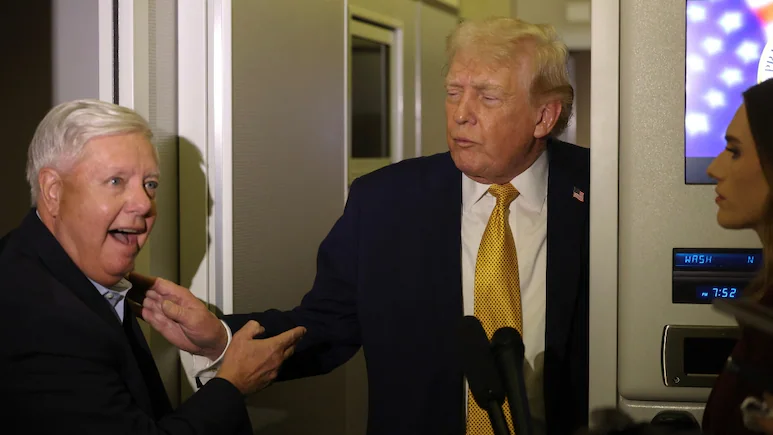
The death of US Senator Lindsey Graham has prompted tributes from political leaders across the United States and abroad. Among them, US President Donald Trump described Graham as a “true American patriot,” remembering one of his closest Republican allies whose influence extended far beyond domestic politics.
Graham was widely known for his strong views on national security and foreign policy. In recent years, he also drew attention in India after advocating steep tariffs on countries that continued buying Russian oil, including proposals that could have imposed duties of up to 500% on imports from nations such as India.
What Happened?
Lindsey Graham, the Republican senator from South Carolina, has died at the age of 71 following a sudden illness, according to an official statement from his office. The announcement triggered tributes from leaders across the political spectrum.
Donald Trump praised Graham on his social media platform, calling him a “true American patriot” and remembering his long service to the United States. Their political relationship evolved over the years—from early disagreements during Trump’s 2016 presidential campaign to a close alliance on judicial appointments, foreign policy, and national security issues.
How Credible Is This News?
This is a confirmed development.
Graham’s death was officially announced by his Senate office, while Trump’s tribute was publicly shared on his Truth Social account. Multiple established international news organisations have independently reported both the senator’s passing and the reactions that followed.
Why Lindsey Graham Was Closely Watched in India
Although Graham spent decades shaping American politics, his recent comments brought him into focus in India.
He became one of the strongest supporters of using tariffs as an economic tool to pressure countries purchasing Russian oil. Graham repeatedly argued that nations continuing large-scale imports from Russia were indirectly helping finance Moscow’s military campaign in Ukraine.
He proposed legislation that would allow tariffs of up to 500% on imports from countries continuing such trade. India, China and Brazil were frequently mentioned in that context because of their energy purchases from Russia.
Earlier this year, Graham also claimed that India’s Ambassador to the United States had requested him to urge President Trump to ease tariffs imposed on India. Indian officials did not publicly confirm that account at the time.
Why This Matters
Graham’s influence extended beyond symbolic political statements.
As one of the Republican Party’s most prominent foreign policy voices, he consistently argued for stronger sanctions on Russia and tougher economic measures against countries maintaining commercial ties with Moscow.
For India, these proposals highlighted the delicate balance New Delhi has tried to maintain since the Ukraine conflict began. India has defended its purchase of Russian oil by arguing that its decisions are guided by national energy security and economic interests rather than geopolitical alignment.
The debate also reflects broader tensions between strategic partnerships and economic priorities, as India and the United States continue expanding defence and technology cooperation while occasionally disagreeing on trade and sanctions.
Who Could Be Affected?
If Graham’s proposed tariff measures had ever been fully implemented, their impact could have been significant.
Countries potentially affected:
- India, China and Brazil through higher export costs to the US.
- Russian energy revenues if more countries reduced oil purchases.
- American businesses importing goods from affected countries.
- Consumers, who could ultimately face higher prices because tariffs often increase import costs.
At the same time, supporters argued such measures could strengthen pressure on Russia by limiting its energy income.
Analysis: Graham’s Legacy in US Foreign Policy
Analysis: Lindsey Graham became one of the most influential Republican voices advocating an assertive American foreign policy.
Whether discussing Ukraine, NATO, Iran or sanctions on Russia, he generally supported stronger US involvement overseas and tougher economic penalties against America’s geopolitical rivals.
Supporters viewed him as a consistent defender of US strategic interests.
Critics, however, argued that aggressive tariff proposals risked disrupting global trade, raising costs for businesses and consumers, and straining relationships with important partners such as India.
These differing views are likely to remain part of the discussion as policymakers debate future US trade and foreign policy.
How Are Stakeholders Responding?
Political leaders from both major US parties have paid tribute to Graham’s decades of public service, even where they disagreed with his policies.
International leaders have also recognised his influence on security and diplomatic issues, particularly his strong support for Ukraine and NATO.
Meanwhile, countries that had been the focus of Graham’s tariff proposals, including India, are expected to continue engaging with Washington through diplomatic and trade channels rather than responding directly to his earlier policy positions.
What Happens Next?
Graham’s death creates both a political and legislative gap.
South Carolina will begin the process of filling his Senate seat under state law, while several foreign policy and sanctions proposals he supported may now move forward under different Republican leadership or lose momentum depending on congressional priorities.
For India-US relations, broader trade negotiations and strategic cooperation are expected to continue independently of Graham’s passing, although his absence removes one of the Senate’s strongest advocates for aggressive tariff-based pressure on countries purchasing Russian oil.
Key Takeaways
- Lindsey Graham, a longtime Republican senator and close Trump ally, has died at the age of 71, prompting tributes from political leaders in the US and abroad.
- Graham became well known in India for advocating extremely high tariffs on countries buying Russian oil, arguing they were helping finance Moscow’s war effort.
- His death is unlikely to immediately change US policy, but it removes one of the Senate’s most influential voices on sanctions, trade pressure and American foreign policy.