Delhi Police Arrest Two Law Students Over Supreme Court Courtroom Disruption: What the Case Means for Judicial Security
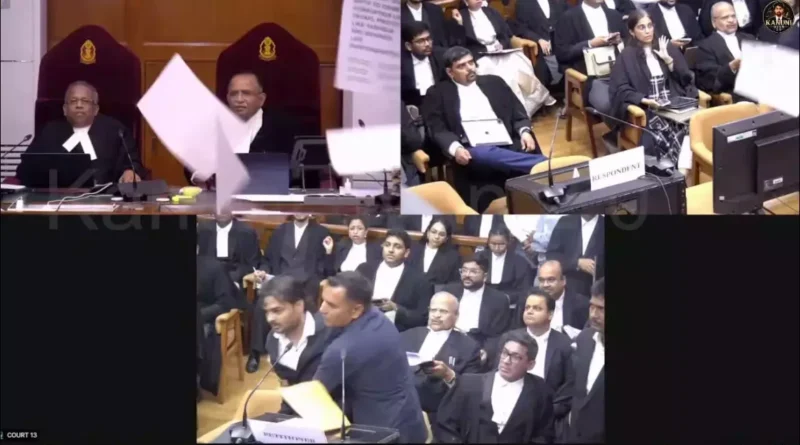
A disruption inside the Supreme Court of India has led to the arrest of two law students, raising fresh concerns about security inside the country’s highest court. The incident has drawn attention not only because it occurred within the Supreme Court premises but also because it involved alleged misconduct during ongoing judicial proceedings.
While the criminal investigation is now underway, the episode has also sparked discussion about courtroom discipline, security protocols, and the responsibilities of individuals entering India’s top judicial institution.
What Happened?
Delhi Police have arrested two law students from Lucknow University in connection with a disturbance that took place inside the Supreme Court on July 10. According to the police, the incident occurred during proceedings before a bench in Courtroom No. 13.
Investigators allege that one of the accused disrupted the hearing by shouting objectionable remarks, throwing court papers, and refusing to follow courtroom instructions. Police further claim that physical resistance was offered when security personnel attempted to intervene. An FIR has been registered under multiple provisions of the Bharatiya Nyaya Sanhita (BNS), and both accused have been taken into police custody as the investigation continues.
The allegations will ultimately be tested through the legal process, and no court has yet determined the guilt of the accused.
How Credible Is This Development?
This is a confirmed development.
The arrests have been officially confirmed by Delhi Police and have been reported by multiple established news organisations. Court-related proceedings and police action have also been documented through official reporting.
However, the criminal case is still at an early stage. The investigation is ongoing, and the accused will have the opportunity to present their defence before the courts.
Why Does This Matter?
The Supreme Court is India’s highest judicial authority, where matters involving constitutional rights, national importance, and major legal disputes are heard. Courtrooms are expected to maintain strict discipline to ensure judges, lawyers, and litigants can participate without intimidation or disruption.
Any disturbance inside such a courtroom is viewed differently from ordinary public disorder because it directly affects the functioning of the judicial system.
The incident also highlights the challenges of balancing public access to courts with maintaining high security standards. Courts remain open institutions where lawyers, litigants, students, journalists, and members of the public may enter under prescribed rules.
Understanding the Legal Side
Police have invoked provisions of the Bharatiya Nyaya Sanhita relating to obstructing public servants, disturbing official proceedings, and other alleged offences connected with the incident.
These charges represent the allegations made by investigators. Whether those allegations are legally established will depend on evidence examined during judicial proceedings.
As with every criminal case, the accused are presumed innocent unless proven guilty by a competent court.
Who Is Affected?
Several groups could be impacted by this development:
- The judiciary, as any courtroom disruption raises concerns about protecting judicial proceedings.
- Lawyers and litigants, who expect hearings to take place in a safe and orderly environment.
- Law students and educational institutions, since the case may prompt greater emphasis on courtroom ethics and professional conduct.
- Security agencies, which may review existing procedures governing entry into sensitive court premises.
Although the incident does not have a direct economic impact, it is significant for public confidence in India’s justice system.
Could This Lead to Changes?
While no policy changes have been announced, such incidents often lead to administrative reviews.
Possible areas of focus may include:
- Review of visitor verification procedures.
- Stronger courtroom security arrangements.
- Improved coordination between court security personnel and police.
- Greater awareness programmes on courtroom conduct, particularly for students and first-time visitors.
Whether any of these measures are adopted will depend on decisions taken by the Supreme Court administration and relevant authorities.
How Are Different Stakeholders Responding?
Delhi Police have proceeded with criminal action, stating that the arrests were made following the investigation into the alleged courtroom disruption.
Legal observers generally view courtroom discipline as essential for maintaining the authority and independence of the judiciary. At the same time, criminal liability will ultimately depend on evidence presented before the courts.
As the matter is sub judice, wider public and institutional reactions are expected to evolve as more details emerge during the investigation and court proceedings.
What Should Readers Expect Next?
The immediate focus will remain on the criminal investigation.
Authorities are likely to:
- Continue collecting evidence.
- Present findings before the appropriate court.
- Decide whether additional charges or procedural steps are necessary.
- Allow the judicial process to determine the outcome based on evidence.
Readers should expect further updates through official court proceedings rather than speculation or unofficial claims.
Key Takeaways
- Delhi Police have arrested two law students over an alleged disruption inside the Supreme Court, and the investigation is ongoing.
- The incident has renewed attention on courtroom security, judicial decorum, and the responsibilities of visitors to India’s highest court.
- The allegations remain subject to judicial scrutiny, and the final legal outcome will depend on the evidence presented before the courts.