Sonam Wangchuk Hunger Strike: Delhi High Court Asked to Intervene as Health Concerns Intensify
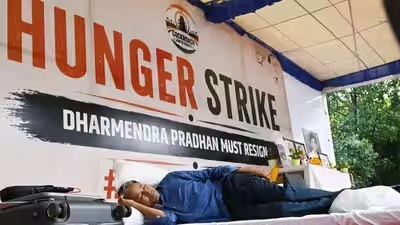
Educator and climate activist Sonam Wangchuk’s prolonged hunger strike has reached a critical stage, prompting a Public Interest Litigation (PIL) in the Delhi High Court seeking urgent medical intervention. The petition argues that his physical condition has deteriorated significantly and requests the authorities to take immediate steps to protect his life.
The case has now moved beyond a political protest and into a legal and humanitarian debate over the balance between an individual’s right to protest and the state’s responsibility to preserve life.
What Happened?
A petition filed before the Delhi High Court urges the Central Government and the Delhi Government to shift Sonam Wangchuk to a government hospital and, if necessary, provide medical treatment even without his consent.
According to the petition, Wangchuk has reportedly lost around 8.5 kilograms since beginning his indefinite hunger strike. The plea argues that his health has deteriorated to a point where delaying treatment could become life-threatening.
The High Court has listed the matter for hearing, making it the latest legal development in an ongoing protest that has attracted growing national attention.
How Credible Is This Development?
This is a confirmed legal development.
The filing of the PIL and the High Court’s decision to hear the matter have been reported by multiple established news organisations. The concerns regarding Wangchuk’s health are based on medical updates shared by those associated with the protest, while the exact medical assessment may continue to evolve as the situation develops.
Why Is This Significant?
The issue extends beyond one individual’s health.
Hunger strikes have historically been used in India as a form of peaceful protest when demonstrators believe other methods have failed to draw attention to their demands. However, as a fast continues and health risks increase, authorities often face difficult questions about whether they should intervene medically or respect the protester’s decision.
In this case, the legal debate focuses on two competing principles:
- The right to peaceful protest and personal autonomy.
- The state’s responsibility to safeguard life and public health.
How the court approaches this balance could influence similar situations in the future.
Background: Why Is Sonam Wangchuk Protesting?
Sonam Wangchuk joined an ongoing protest linked to concerns over alleged examination irregularities and demands for greater accountability in India’s education system.
Supporters argue that the movement seeks stronger transparency and reforms, while critics have questioned aspects of the protest and its political implications. The government has not publicly accepted the protesters’ demands, and calls for dialogue have continued from supporters.
Who Is Affected?
Several groups are directly or indirectly impacted by the developments:
- Sonam Wangchuk, whose health remains the immediate concern.
- Students and education reform campaigners, who see the protest as highlighting broader governance issues.
- The Central and Delhi governments, which now face legal scrutiny over their response.
- Healthcare professionals, who may have to navigate ethical questions surrounding treatment without consent.
- The judiciary, which must weigh constitutional rights alongside medical urgency.
Different Stakeholders Have Different Views
The Petitioner’s Position
The PIL argues that Wangchuk’s health has reached a dangerous stage and requests immediate medical intervention, including hospitalisation if required.
Protest Supporters
Supporters have continued to express concern over Wangchuk’s condition while urging authorities to engage in dialogue rather than allowing the situation to worsen. Some public figures have also appealed for negotiations.
Government Position
At the time of reporting, the court has sought responses from the concerned governments. Their detailed submissions are expected during the court proceedings.
Could This Lead to Broader Changes?
The immediate outcome will depend on the High Court’s directions.
Possible short-term developments include:
- Medical evaluation under court supervision.
- Government responses explaining actions already taken.
- Further hearings if Wangchuk’s condition changes.
In the longer term, the case may contribute to wider discussions on:
- Management of prolonged hunger strikes.
- Legal limits of state intervention during protests.
- Public confidence in institutions handling sensitive political demonstrations.
Any broader policy changes would depend on future government decisions and judicial observations.
What Should Readers Expect Next?
Several developments are likely to be closely watched:
- The Delhi High Court’s hearing on the PIL.
- Official responses from the Central and Delhi governments.
- Fresh medical updates regarding Wangchuk’s condition.
- Whether discussions between authorities and protesters begin.
Since the legal proceedings are ongoing, the situation remains fluid and additional information may emerge in the coming days.
Key Takeaways
- A PIL before the Delhi High Court seeks urgent medical intervention for Sonam Wangchuk amid concerns over his deteriorating health during an indefinite hunger strike.
- The case raises important constitutional and ethical questions about balancing an individual’s right to protest with the state’s responsibility to protect life.
- The High Court’s proceedings and the government’s response are expected to shape the next phase of this developing story.