NASA’s Curiosity Rover Finds Unusual Honeycomb-Like Rock Pattern on Mars: What Scientists Know So Far
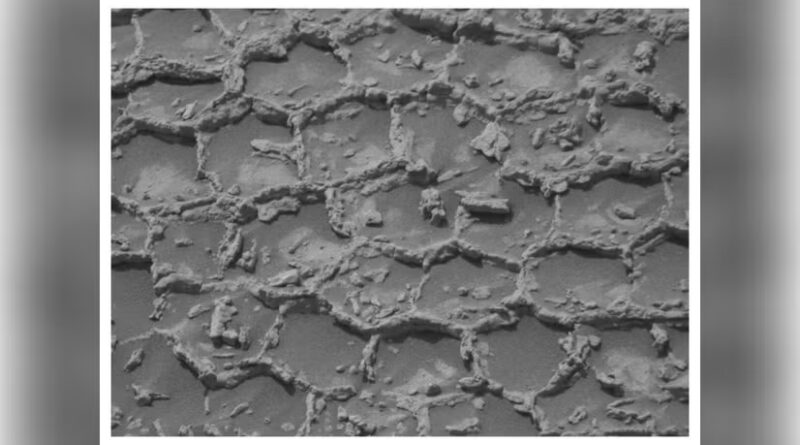
NASA’s Curiosity rover has photographed an unusual honeycomb-like pattern on the surface of Mars, adding another puzzle to the growing list of geological mysteries on the Red Planet. While the discovery has attracted global attention, scientists have not yet determined exactly how the structure formed.
The finding does not indicate evidence of life on Mars. Instead, it offers researchers another opportunity to better understand the planet’s geological history and the environmental conditions that existed billions of years ago.
What Has NASA Discovered?
NASA’s Curiosity rover, which has been exploring Mars since 2012, recently captured detailed images of a rocky region inside Gale Crater featuring interconnected polygon-shaped ridges. From above, the formation resembles a honeycomb or a network of irregular hexagonal cells.
Scientists first noticed the area through orbital observations before directing Curiosity to investigate it up close. As the rover approached, it found that some of the raised ridges appeared more weathered than expected and were surrounded by scattered dark-colored rocks.
How Credible Is This Discovery?
This discovery comes directly from NASA’s Mars Science Laboratory mission and is based on images and observations collected by the Curiosity rover itself. That makes the finding highly credible.
However, an important distinction remains:
- The unusual rock formation is confirmed.
- The explanation for how it formed is not yet confirmed.
- Scientists are continuing to study multiple possible geological processes that may have created the pattern.
At this stage, there is no official conclusion about the origin of the structure.
Why Are Scientists Interested?
Mars has experienced dramatic environmental changes over billions of years. Evidence collected by multiple missions suggests the planet once had rivers, lakes, volcanic activity, groundwater movement, shifting sediments and powerful winds.
Geologists believe these natural processes may have contributed to creating the polygon-shaped ridges, but additional analysis is needed before identifying the exact mechanism.
Understanding how these formations developed could help scientists answer broader questions, including:
- How Mars’ landscape evolved over time.
- Whether groundwater once flowed through this region.
- Which locations may preserve records of the planet’s ancient environment.
The Mystery of the Dark Rocks
The honeycomb-like structure is not the only feature attracting scientific attention.
Researchers are also studying several dark rocks scattered across the site. According to NASA, these rocks may have originated in different ways, including:
- Pieces of Martian rock transported from higher layers.
- Material thrown into the area by ancient asteroid impacts.
- Meteorites that landed on Mars from space.
Some similar rocks examined during previous missions contained nickel, an element commonly found in meteorites. Even so, NASA has not concluded that these newly observed rocks share the same origin.
Why Does This Matter?
At first glance, an unusual rock pattern may appear to be a minor discovery. In planetary science, however, every geological feature helps researchers reconstruct the history of a planet that can no longer be observed directly.
Each new formation provides clues about:
- Ancient climate conditions.
- Water activity beneath the surface.
- Changes in the Martian landscape over millions or even billions of years.
- Locations where evidence of past habitability might still be preserved.
Rather than offering dramatic answers, discoveries like this gradually improve scientists’ understanding of how Mars evolved into the cold, dry world seen today.
Who Benefits From This Research?
The immediate benefits are scientific rather than commercial.
Key stakeholders include:
- Planetary scientists studying Mars’ geological history.
- NASA and international space agencies planning future exploration missions.
- Universities and research institutions analysing Martian data.
- Future robotic and human missions that rely on a better understanding of Martian terrain.
Although there is no direct economic impact today, continued discoveries help shape future investments in space exploration, scientific research and advanced robotic technologies.
Could This Influence Future Mars Missions?
Possibly.
If scientists determine that the polygonal formations were created by ancient groundwater or other significant geological processes, similar regions may receive greater attention during future exploration missions.
These sites could become priorities for:
- Additional rover investigations.
- Sample collection missions.
- Future human exploration planning.
For now, this remains a possibility rather than an announced mission objective.
Expert Perspective
Planetary geologists generally view discoveries like this as valuable pieces of a much larger puzzle rather than standalone breakthroughs.
One unusual formation rarely changes scientific understanding by itself. Instead, researchers compare it with observations from previous rover missions, orbital imagery and laboratory analysis before drawing conclusions.
This careful, evidence-based approach helps avoid premature claims while improving the accuracy of long-term research.
What Should Readers Expect Next?
NASA is expected to continue studying both the polygonal ridges and the surrounding dark rocks using Curiosity’s scientific instruments. Additional observations and chemical analysis may help narrow down the possible explanations.
Readers should expect gradual updates rather than immediate answers. Geological investigations on Mars often take months or even years before researchers reach strong scientific conclusions.
Key Takeaways
- NASA’s Curiosity rover has confirmed the existence of an unusual honeycomb-like rock formation inside Mars’ Gale Crater, but its origin remains unknown.
- Scientists believe the formation could provide valuable clues about Mars’ geological evolution, ancient groundwater activity and environmental history, although no single explanation has been confirmed yet.
- The discovery highlights how ongoing rover missions continue to deepen our understanding of the Red Planet through careful scientific investigation rather than sensational claims.