Mamata Banerjee Signals Political Fightback, Targets BJP With Fresh Call to Supporters
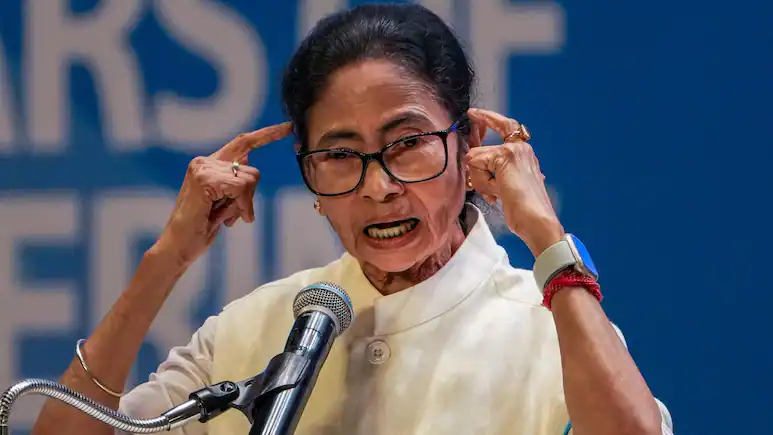
Political rhetoric intensified in West Bengal after Trinamool Congress (TMC) chief Mamata Banerjee declared that her political struggle was far from over, using the Bengali slogan “Korbo, Lorbo, Bachbo” (We will act, we will fight, we will survive). Her remarks came during a period of heightened political tension between the TMC and the Bharatiya Janata Party (BJP), reinforcing her message that she intends to remain an active force in state and national politics.
What Happened?
Mamata Banerjee delivered a strongly worded political message in which she rejected suggestions that she would retreat from public life or compromise with political opponents. Addressing supporters, she said she would continue fighting despite the challenges facing her party and warned the BJP that her political journey was not over.
The slogan “Korbo, Lorbo, Bachbo,” long associated with political resistance in Bengal, was once again used to rally party workers and reassure supporters that the TMC leadership intends to remain politically active.
How Credible Is This Development?
This is a confirmed political development based on Mamata Banerjee’s publicly delivered remarks, which have been reported by multiple established news organisations.
However, the speech largely consists of political statements and campaign messaging, not announcements of government policy or administrative decisions. While her comments are factual as quotations, their political implications remain open to interpretation and will depend on future developments.
Why Does This Matter?
The statement arrives at a politically significant time for West Bengal.
The TMC has been facing sustained pressure from the BJP, alongside organisational challenges and political criticism. In this environment, Banerjee’s message serves several purposes:
- Reassures party workers after recent political setbacks.
- Signals that the leadership is preparing for future electoral battles.
- Attempts to maintain unity within the party.
- Reinforces the party’s image as the BJP’s principal challenger in West Bengal.
For opposition politics nationally, Banerjee remains one of the prominent regional leaders capable of influencing broader anti-BJP alliances.
Background: Why Is Political Tension High?
Political rivalry between the BJP and the TMC has intensified over the past several years, particularly after the BJP significantly expanded its presence in West Bengal.
Since then, both parties have frequently accused each other of political intimidation, misuse of institutions, and attempts to weaken rivals. The latest remarks fit into this continuing political confrontation rather than representing an isolated event.
What Does “Korbo, Lorbo, Bachbo” Mean?
The Bengali slogan translates roughly as:
- Korbo — We will act.
- Lorbo — We will fight.
- Bachbo — We will survive.
The phrase is intended to communicate determination and resilience. In political speeches, it is commonly used to encourage supporters during difficult periods rather than announce any specific policy initiative.
Different Political Perspectives
Trinamool Congress’ Position
The TMC presents Banerjee’s speech as a message of determination, arguing that the party will continue resisting political pressure and remain committed to its supporters.
BJP’s Position
The BJP has consistently criticised the TMC’s governance and argues that political change in West Bengal is necessary. BJP leaders are likely to view Banerjee’s remarks as part of the party’s broader political campaign rather than evidence of renewed strength.
Political Observers
Many analysts see such speeches as important morale-building exercises for party workers. Public declarations of confidence often become especially significant when parties are facing organisational challenges or preparing for future elections.
Who Is Most Affected?
Several groups could be influenced by this development:
- TMC workers, who may view the speech as encouragement to remain politically active.
- BJP leadership, which continues to position itself as the TMC’s principal challenger.
- West Bengal voters, who can expect political campaigning to become increasingly intense.
- Opposition parties nationally, as Banerjee remains an influential regional leader in discussions around broader opposition coordination.
At present, there is no immediate economic or policy impact arising directly from these remarks.
Could This Lead to Larger Political Changes?
The immediate effect is likely to be political rather than administrative.
Possible developments include:
- Increased political mobilisation by both major parties.
- More public rallies and campaign activity.
- Stronger efforts by the TMC to consolidate its organisation.
- Continued political confrontation ahead of future elections.
Whether these statements ultimately influence voter behaviour will depend on future political events rather than this speech alone.
What Should Readers Expect Next?
Readers should expect continued political exchanges between the TMC and the BJP in the coming weeks.
Future developments worth watching include:
- Responses from BJP leaders.
- Further public appearances by Mamata Banerjee.
- Organisational decisions within the TMC.
- Election-related political strategies as campaigning gradually intensifies.
At this stage, no major policy announcement has accompanied the speech.
Key Takeaways
- Mamata Banerjee has publicly declared that she intends to continue her political struggle and challenged the BJP through a message aimed at energising party supporters.
- The remarks are confirmed political statements rather than government policy announcements, making their practical impact dependent on future political developments.
- The speech reflects the continuing political contest between the TMC and the BJP, with both parties expected to intensify their campaigns as future elections approach.