Sonam Wangchuk Says ‘I Am Not Gandhi’ as Indefinite Fast Continues, Urges People to Lead Their Own Movements
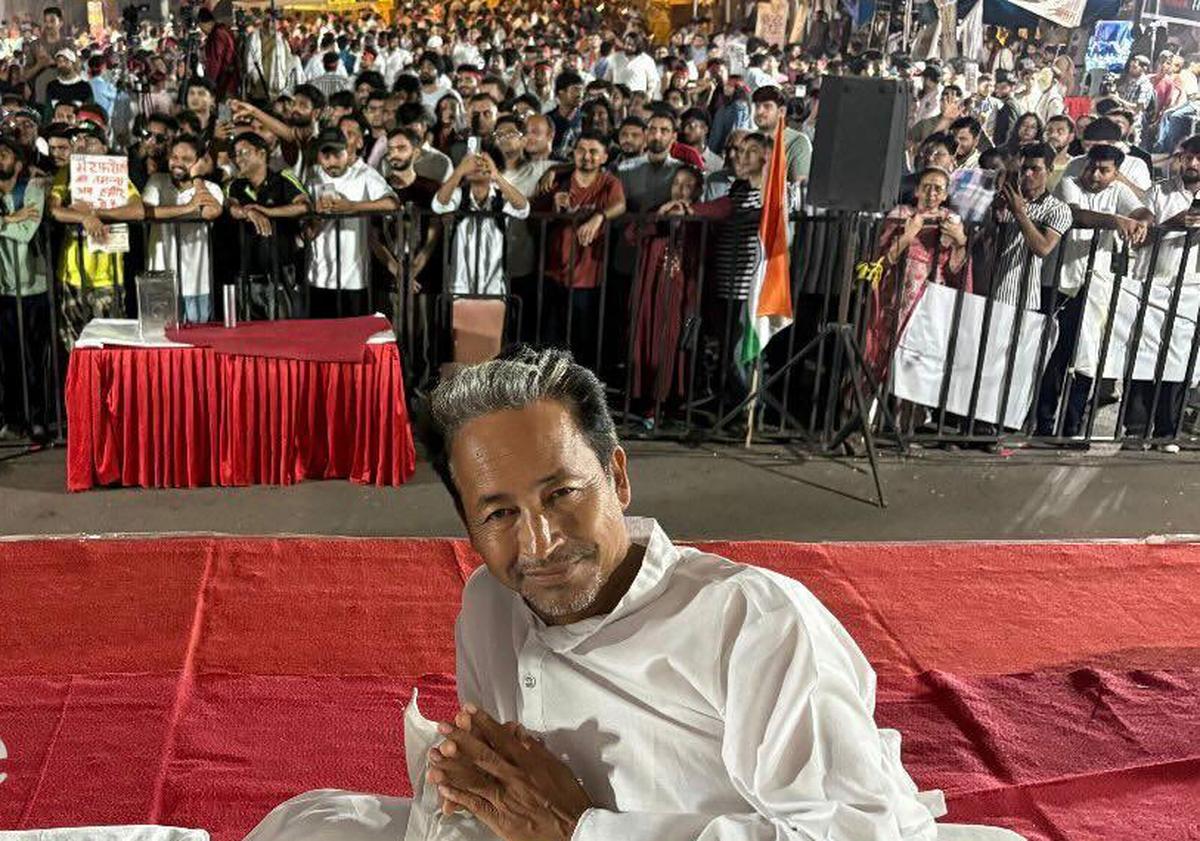
Climate activist and educationist Sonam Wangchuk has said he should not be viewed as another Mahatma Gandhi, urging supporters to become “their own heroes” instead of relying on a single public figure to lead social movements. His remarks came as he continued his indefinite hunger strike in New Delhi, where he is protesting over issues linked to governance and accountability.
The statement reflects Wangchuk’s attempt to shift attention from his personal sacrifice to the broader causes he says require public participation.
What Happened?
Speaking during his ongoing hunger strike at Jantar Mantar, Wangchuk said people should stop searching for another Gandhi and instead take responsibility for protecting democracy, the Constitution and public institutions.
His comments came amid growing concern about his health as the fast entered another phase. According to updates shared by those associated with the protest, doctors have been monitoring his condition regularly, with reports indicating significant weight loss during the hunger strike.
The protest remains peaceful and continues to draw support from sections of civil society, students and activists.
How Credible Is This Development?
This is a confirmed development based on Wangchuk’s public statements made during his ongoing protest. His remarks have been reported by multiple established news organisations, while updates regarding his health have also been shared through official medical bulletins and widely reported by national media.
No major factual dispute has emerged regarding his statement, although different groups continue to disagree over the political demands behind the protest.
Why Did Wangchuk Say, “I Am Not Gandhi”?
The comparison with Mahatma Gandhi naturally arises because hunger strikes have historically been associated with India’s freedom movement.
However, Wangchuk argued that modern democratic participation cannot depend on one symbolic leader. According to him, citizens themselves must actively defend constitutional values and hold institutions accountable rather than waiting for a single individual to lead every movement.
His message was less about rejecting Gandhi’s legacy and more about encouraging wider civic responsibility.
The Background Behind the Protest
Wangchuk’s hunger strike began after he expressed dissatisfaction with the pace of discussions between representatives from Ladakh and the Central government.
He has been advocating for constitutional protections and environmental safeguards for Ladakh, while more recently also lending support to demands for accountability over alleged examination-related irregularities during the ongoing demonstrations.
The protest has evolved into a broader conversation about public accountability, governance and citizen participation.
Why Does This Matter?
Although Wangchuk’s comments focus on leadership, the larger significance lies in the issues surrounding democratic engagement.
Several questions remain central to the debate:
- How should citizens participate in democratic decision-making?
- What role should peaceful protests play in influencing public policy?
- How responsive should governments be to prolonged public demonstrations?
- Can individual-led movements still shape policy in today’s political environment?
These questions extend beyond the immediate protest and affect discussions on governance across India.
Who Is Affected?
Supporters of the Movement
Many activists, students and civil society organisations view the protest as an effort to push for greater transparency and accountability in public institutions.
Government
The government faces continued public scrutiny over the demands raised by protesters. At the same time, officials must balance the constitutional right to peaceful protest with maintaining public order.
People in Ladakh
Residents concerned about environmental protection and constitutional safeguards continue to closely watch whether negotiations produce any tangible outcomes.
Different Stakeholders Hold Different Views
The ongoing protest has generated varied reactions.
Supporters argue that:
- Peaceful protest remains an essential democratic right.
- Hunger strikes help draw attention to issues that may otherwise receive limited public focus.
- Citizen participation is necessary for stronger institutions.
Critics argue that:
- Public policy should primarily be resolved through institutional dialogue rather than prolonged hunger strikes.
- Governments must consider multiple competing priorities before accepting protest demands.
Neither side disputes Wangchuk’s right to protest peacefully, but they differ on how effective such methods are in influencing policy.
Analysis: Why His Statement Is Significant
Analysis
By declaring “I am not Gandhi,” Wangchuk appears to be reframing the public conversation.
Instead of allowing the movement to become centred entirely around his personal fast, he is encouraging supporters to build a broader civic movement that does not depend on one individual. This reflects a wider debate seen in many democracies, where sustained public engagement is often viewed as more durable than personality-driven campaigns.
Whether that message translates into larger public participation remains uncertain.
What Could Happen Next?
Several developments are possible over the coming days:
- Medical concerns surrounding Wangchuk’s health may increase if the fast continues.
- Authorities may continue discussions with protest representatives.
- Civil society groups could expand support for the movement through peaceful demonstrations.
- Political responses may evolve if the protest gains wider national attention.
At present, there is no confirmed indication of an immediate resolution.
Key Takeaways
- Sonam Wangchuk says he should not be seen as another Gandhi and wants citizens to become active participants rather than depending on individual leaders.
- His hunger strike continues as part of a wider movement focused on accountability, governance and constitutional concerns.
- The protest highlights broader questions about democratic participation, peaceful dissent and how governments respond to sustained public movements.