PM Modi Thanks South Korean President Lee for Diplomatic Message During Landmark New Zealand Visit
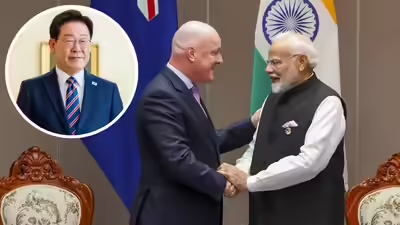
A brief exchange of messages between Indian Prime Minister Narendra Modi and South Korean President Lee Jae-myung has drawn attention during Modi’s historic visit to New Zealand. While the interaction itself was short, it reflects the broader diplomatic outreach taking place alongside India’s efforts to strengthen partnerships across the Indo-Pacific region.
The exchange comes at a time when India is expanding engagement with countries that share interests in trade, regional security, and economic cooperation.
What Happened?
Prime Minister Narendra Modi thanked South Korean President Lee Jae-myung after the South Korean leader publicly conveyed his best wishes for stronger India-New Zealand relations during Modi’s visit to Auckland.
President Lee expressed hope for continued friendship and progress between India and New Zealand through a message on social media. Modi responded by thanking him for the warm wishes, describing the gesture as thoughtful and appreciative.
Although the exchange did not announce any new agreement between India and South Korea, it highlighted the cordial diplomatic relations among the three countries.
How Credible Is This News?
This development is officially confirmed.
The messages were exchanged publicly by the two leaders and reported by multiple established news organizations. There is no indication that the exchange involved any unofficial claims or disputed information.
Why Does This Matter?
On the surface, the interaction appears ceremonial. However, diplomatic messages between heads of government often carry symbolic importance.
Modi’s New Zealand visit is itself significant because it marks the first visit by an Indian Prime Minister to the country in around four decades. During the trip, India and New Zealand upgraded their relationship to a Strategic Partnership and announced cooperation across trade, defence, security, education and technology.
Against that backdrop, South Korea’s public acknowledgement signals support for stronger regional cooperation among democratic partners in the Indo-Pacific.
The Bigger Diplomatic Context
India has increasingly focused on expanding partnerships across the Indo-Pacific through economic, strategic and people-to-people ties.
Modi’s multi-country tour covering Indonesia, Australia and New Zealand reflects this broader foreign policy approach. According to the Indian government, the visit aims to deepen cooperation in trade, investment, security and emerging technologies while reinforcing India’s Act East Policy.
South Korea is already an important partner for India in sectors including:
- Electronics manufacturing
- Technology and innovation
- Clean energy
- Defence cooperation
- Supply chain resilience
While the latest exchange did not introduce new bilateral initiatives, it reinforces the positive diplomatic atmosphere between New Delhi and Seoul.
Who Benefits?
Several stakeholders could gain from stronger regional engagement.
India
- Expands diplomatic influence in the Indo-Pacific.
- Strengthens strategic partnerships beyond traditional allies.
- Creates opportunities for trade and investment.
New Zealand
- Benefits from deeper economic engagement with one of the world’s fastest-growing major economies.
- Gains wider cooperation in education, agriculture, defence and technology.
South Korea
- Reinforces its relationships with two important Indo-Pacific partners.
- Supports a stable regional environment that benefits trade and supply chains.
Businesses and diaspora communities
- Closer diplomatic ties often encourage greater business collaboration, tourism, academic exchanges and cultural connections.
Could This Lead to Bigger Changes?
Immediate Impact
The exchange itself does not change policy.
However, it adds goodwill during a period when India is actively strengthening international partnerships.
Longer-Term Possibilities
If current diplomatic momentum continues, observers may see:
- Greater trilateral or multilateral cooperation in the Indo-Pacific.
- Increased investment and technology partnerships.
- Expanded collaboration on maritime security and resilient supply chains.
- More educational and cultural exchanges between partner countries.
These outcomes would depend on future negotiations and government decisions rather than this social media interaction alone.
How Are Stakeholders Likely to View It?
Governments
Officials are likely to view the exchange as another example of positive diplomatic engagement accompanying Modi’s broader foreign visits.
Strategic analysts
Many foreign policy observers see such public exchanges as part of modern diplomacy, where symbolic gestures help reinforce long-term partnerships even when no immediate agreements are announced.
Public
For most citizens, the exchange is unlikely to have an immediate effect on daily life. However, stronger international partnerships can influence future trade opportunities, education links and investment over time.
What Should Readers Expect Next?
Attention will remain on the outcomes of Modi’s New Zealand visit rather than the exchange itself.
Observers will watch for:
- Progress on implementing India-New Zealand agreements.
- Further developments in trade and defence cooperation.
- Continued diplomatic engagement between India and key Indo-Pacific partners, including South Korea.
Whether today’s goodwill translates into additional policy initiatives will become clearer in the coming months.
Key Takeaways
- Prime Minister Narendra Modi publicly thanked South Korean President Lee Jae-myung for his message supporting stronger India-New Zealand ties during Modi’s visit to Auckland.
- The exchange is officially confirmed and reflects friendly diplomatic relations rather than a new policy announcement.
- The broader significance lies in India’s expanding engagement across the Indo-Pacific, where trade, security and strategic partnerships are becoming increasingly important.