School Students Killed After Train Hits Pool Car at Railway Crossing in West Bengal: What Happened and Why It Matters
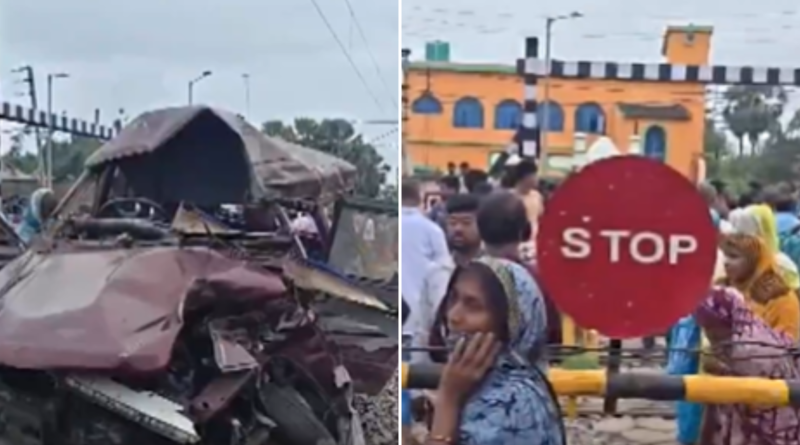
A tragic railway crossing accident in West Bengal’s Murshidabad district has claimed the lives of school students and raised fresh concerns about safety at level crossings. The incident has also prompted questions about whether existing safety measures are sufficient to prevent similar tragedies in the future.
What Happened?
A vehicle commonly used as a school pool car was struck by a passenger train while crossing railway tracks near Karna Subarna railway station in Murshidabad district on Friday morning.
According to official information available so far, three people, including two school students, lost their lives in the collision. Several other children travelling in the vehicle were injured, with some reported to be in critical condition. Emergency teams, police personnel and railway officials reached the accident site soon after the crash, while the injured were shifted to nearby hospitals for treatment.
Train movement on the affected railway section was temporarily disrupted as rescue work and the initial investigation began.
How Credible Is This Information?
The incident has been confirmed by railway officials and local police, making it a verified news event rather than an unconfirmed report.
However, the exact sequence of events leading to the collision remains under investigation. Early reports have presented differing accounts regarding how the vehicle entered the crossing and whether the level-crossing gate was open at the time. Authorities have not yet released a final conclusion, so readers should treat preliminary witness accounts with caution until the official inquiry is completed.
Why This Accident Matters
Railway level crossings remain one of the most vulnerable points in India’s transport network because road and rail traffic intersect directly.
When school vehicles are involved, the consequences become even more serious because they affect children travelling during routine school hours. Every such incident raises wider questions about:
- Safety procedures at railway crossings
- Compliance with traffic rules
- Protection of school transport
- Emergency response systems
- Infrastructure improvements
Although India’s railway network has expanded safety measures over the years, accidents at level crossings continue to occur, showing that infrastructure upgrades alone may not eliminate every risk.
Background: What Is a Railway Level Crossing?
A level crossing is a point where a road crosses railway tracks at the same ground level.
Depending on the location, crossings may be:
- Manned by railway staff
- Protected by gates or barriers
- Equipped with warning signals
- Replaced by bridges or underpasses in high-traffic areas
Because trains require long distances to stop, road users are expected to wait whenever crossings are closed or warning systems are active.
Who Is Most Affected?
The immediate impact falls on multiple groups.
Families
Parents and relatives face an irreversible personal loss, while injured students may require prolonged medical treatment and emotional support.
Schools
Schools using private transport services may review their transportation arrangements and safety protocols following such incidents.
Local Community
Residents often experience temporary disruption due to rescue operations, traffic restrictions and emotional distress caused by the tragedy.
Railways and Local Authorities
The incident is likely to bring increased public scrutiny over railway crossing management, maintenance practices and enforcement of safety procedures.
What Could Change After This Incident?
Immediate Steps
Authorities are expected to:
- Conduct a detailed investigation.
- Examine the functioning of the railway crossing.
- Record statements from railway staff, witnesses and emergency responders.
- Review operational procedures at the accident site.
Long-Term Possibilities
Depending on the investigation’s findings, the accident could lead to:
- Stronger monitoring of railway crossings.
- Better coordination between railway and road authorities.
- Additional safety awareness campaigns for drivers.
- Consideration of replacing vulnerable crossings with overbridges or underpasses where feasible.
Any policy decisions, however, will depend on the official inquiry and subsequent government action.
How Are Different Stakeholders Responding?
Government and Administration
Police and railway officials have launched an investigation into the circumstances surrounding the collision. Rescue operations were prioritised immediately after the accident, followed by efforts to restore railway services.
Railway Authorities
Railway officials are examining operational records and the condition of the crossing to determine what led to the accident.
Local Residents
Witnesses and residents have expressed grief and concern, while some have raised questions about the functioning of the crossing. These claims remain part of the ongoing investigation and have not yet been officially verified.
What Should Readers Expect Next?
The investigation is expected to establish:
- Whether all safety procedures were followed.
- If any human error contributed to the accident.
- Whether mechanical or operational failures played a role.
- If disciplinary or legal action is required.
Authorities may also release additional details regarding the condition of the injured students and any recommendations arising from the inquiry.
Until the official investigation concludes, several aspects of the incident remain subject to verification.
Key Takeaways
- A passenger train collided with a school pool car at a railway crossing in Murshidabad, West Bengal, resulting in the deaths of two students and another individual, while several children were injured.
- The incident has been officially confirmed, but investigators are still determining the exact circumstances that led to the collision.
- The tragedy has once again highlighted the importance of railway crossing safety, school transport practices and continued investment in accident prevention measures across India’s transport network.