US-Iran Tensions Escalate After Strikes Near Qeshm Island: Why the Strait of Hormuz Remains at the Centre of the Crisis
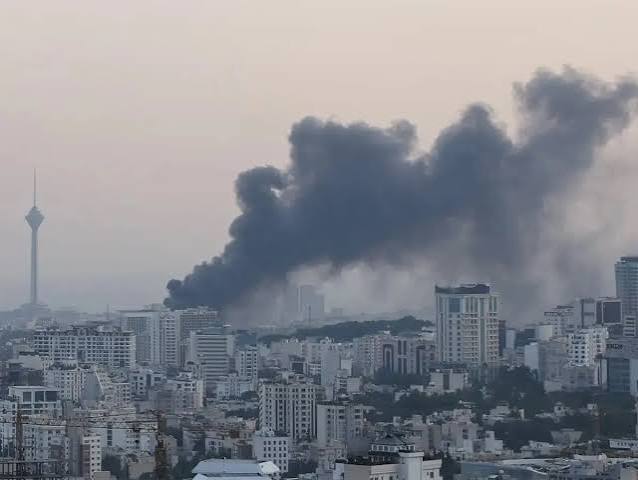
The latest exchange of military action between the United States and Iran has added fresh uncertainty to an already volatile Middle East. Reports of projectiles striking military targets on Iran’s Qeshm Island come amid a broader confrontation linked to security in the Strait of Hormuz—one of the world’s most strategically important maritime routes.
As the situation continues to evolve, governments and global markets are closely watching whether the conflict remains limited or expands further.
What Happened?
Iranian state media reported that projectiles struck military targets on Qeshm Island, located near the Strait of Hormuz. Authorities said explosions were also heard around Bandar Abbas and nearby areas, while no casualties were immediately reported.
A US official, speaking anonymously to international media, said American forces carried out limited strikes against Iranian missile systems, air defence assets and vessels linked to the Islamic Revolutionary Guard Corps (IRGC). According to the official, the objective was to reduce Iran’s ability to threaten commercial shipping in the region.
The strikes followed a series of attacks on commercial vessels in the Strait of Hormuz, which Washington attributes to Iran. Tehran has rejected US actions as violations of previous understandings and has warned that it will respond to protect its national interests.
How Credible Is This Development?
This is a confirmed and developing international security story.
Multiple aspects of the incident have been reported by established international news organisations, including the Associated Press and Financial Times. Iranian state media has acknowledged explosions in the affected region, while US officials have separately confirmed military operations targeting Iranian assets.
However, several operational details—including the full extent of the damage and the exact sequence of military actions—remain independently unverified. Both Washington and Tehran continue to present differing narratives regarding responsibility for the escalation.
Why Does Qeshm Island Matter?
Although Qeshm Island may be unfamiliar to many readers, it occupies one of the most strategically significant locations in the Middle East.
Situated beside the Strait of Hormuz, the island overlooks a narrow shipping corridor through which a substantial share of the world’s oil and liquefied natural gas exports pass. Because of its location, military infrastructure on Qeshm plays an important role in Iran’s ability to monitor and influence maritime traffic.
Any military activity around the island immediately raises concerns about shipping security and regional stability.
Background: Why Are the US and Iran Clashing Again?
Relations between Washington and Tehran have remained tense for years, shaped by disagreements over regional security, sanctions and military activities.
The latest escalation follows attacks on commercial shipping in the Strait of Hormuz. The United States argues its strikes are intended to safeguard international maritime trade and deter future attacks.
Iran, meanwhile, accuses Washington of violating previous agreements and says it has the right to defend its sovereignty. Iranian officials have warned that continued military pressure could invite further retaliation.
Who Is Most Affected?
Several groups stand to be impacted if tensions continue.
Regional countries
- Gulf nations hosting US military facilities face increased security risks.
- Civil aviation and maritime operations may require additional precautions.
Global energy markets
- The Strait of Hormuz is a vital energy corridor.
- Any disruption can affect international oil and natural gas supplies, even if shipping continues.
Shipping and trade
- Commercial vessels may encounter higher insurance premiums.
- Freight costs could rise if shipping companies alter routes or increase security measures.
Ordinary citizens
- Residents in affected regions face growing uncertainty.
- Consumers worldwide may eventually feel the effects through higher fuel and transportation costs if disruptions persist.
Economic and Geopolitical Significance
Even limited military exchanges around the Strait of Hormuz attract global attention because of the waterway’s importance to international commerce.
Investors closely monitor developments since prolonged instability could influence:
- Energy prices
- Shipping costs
- Regional investment
- Inflation in countries dependent on imported fuel
Beyond economics, the confrontation also affects diplomatic relations across the Middle East, where several governments are attempting to prevent a broader regional conflict.
How Are Different Stakeholders Responding?
United States
American officials maintain that recent military operations are defensive in nature and intended to protect commercial shipping from future attacks.
Iran
Iranian authorities have condemned the strikes, calling them violations of previous understandings and warning of consequences if military pressure continues.
Regional governments
Countries across the Gulf are expected to continue strengthening security around critical infrastructure while encouraging diplomatic efforts to avoid further escalation.
International observers
Many analysts argue that maintaining safe passage through the Strait of Hormuz remains a priority for the global economy, making diplomatic engagement increasingly important alongside military deterrence.
What Could Happen Next?
The immediate focus will be whether military operations remain limited or expand into a broader confrontation.
Several developments are likely to be watched closely:
- Possible additional US or Iranian military responses
- Security conditions in the Strait of Hormuz
- Commercial shipping activity through the region
- Diplomatic efforts aimed at preventing wider conflict
- Any impact on global energy markets
Because the situation remains fluid, official statements from both governments may continue to evolve over the coming days.
Analysis: Why This Story Matters Beyond the Middle East
Analysis
While the reported strikes appear targeted at military assets rather than civilian infrastructure, their significance extends far beyond Iran.
The Strait of Hormuz is a critical artery for global energy trade, meaning even relatively limited military exchanges can influence shipping confidence, insurance costs and market sentiment. History has shown that uncertainty in this region often has consequences well beyond the countries directly involved.
At the same time, both Washington and Tehran face strategic incentives to demonstrate resolve while avoiding a full-scale regional war. Whether that balance can be maintained will largely determine how the crisis develops.
Key Takeaways
- Confirmed reports indicate fresh US military strikes near Iran’s Qeshm Island following renewed tensions linked to security in the Strait of Hormuz.
- The situation remains active, with both governments offering competing explanations for the latest escalation and further developments still unfolding.
- Because the Strait of Hormuz is central to global energy trade, continued instability could have economic and geopolitical consequences extending well beyond the Middle East.