Typhoon Bavi Weakens After Hitting Eastern China, But Heavy Rain and Flood Risks Continue
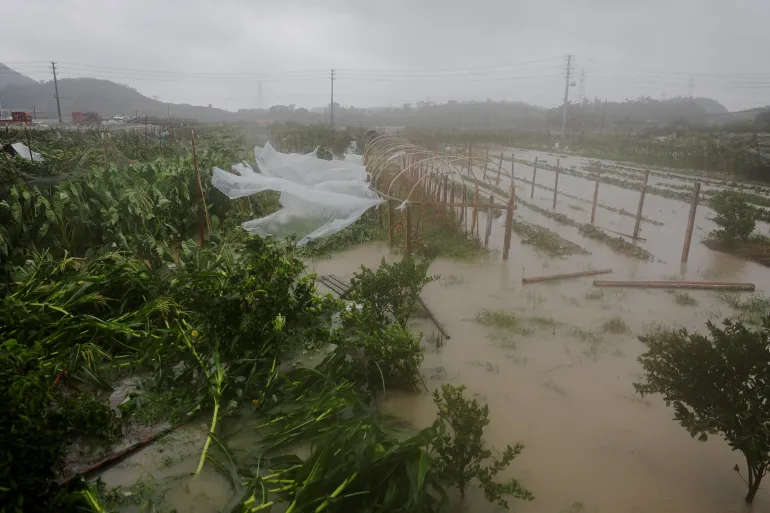
Typhoon Bavi has weakened into a tropical storm after making landfall in eastern China, but authorities say the danger is far from over. While the storm has lost some of its wind strength, millions of people remain affected as heavy rainfall, flooding, transport disruptions and evacuation efforts continue across several provinces.
Officials are now shifting their focus from powerful winds to the growing risk of floods, landslides and prolonged rainfall as the weather system moves further inland.
What Happened?
Typhoon Bavi made landfall along China’s eastern coast before weakening into a tropical storm as it travelled inland. Despite this downgrade in intensity, the storm continues to produce widespread heavy rain and strong winds across eastern China.
Chinese authorities evacuated millions of residents ahead of the storm, particularly in Zhejiang Province, while airports, rail services and highways experienced major disruptions. Hundreds of flights were cancelled, schools and businesses closed in several areas, and emergency response teams were deployed before the storm reached land.
Before reaching mainland China, Bavi also affected Taiwan and parts of Japan, where strong winds and rain caused injuries, transport disruptions and precautionary evacuations.
How Credible Is This News?
This is a confirmed weather event.
The storm’s track, landfall and weakening have been officially reported by China’s National Meteorological Center and covered by multiple international news organisations. The reported evacuations, transport disruptions and weather warnings are based on official government announcements and emergency management updates.
Although weather forecasts may change as the system moves inland, there is no significant dispute regarding the storm’s landfall or its current status.
Why Does the Storm Still Matter After Weakening?
Many people assume a tropical storm is no longer dangerous once it is downgraded from a typhoon. In reality, heavy rainfall often becomes the biggest threat after landfall.
As tropical systems slow down over land, they can release enormous amounts of rain over a relatively small area. This increases the likelihood of:
- Flash floods
- River flooding
- Landslides in mountainous regions
- Urban waterlogging
- Damage to roads, railways and power infrastructure
Meteorologists have warned that several parts of eastern and northern China could continue receiving significant rainfall even as Bavi weakens further.
Background: China Faces Another Round of Extreme Weather
Bavi is not an isolated event.
China has already experienced multiple episodes of severe weather this summer, including earlier typhoons, flooding and unusually heavy rainfall across different provinces. In several regions, saturated ground conditions mean additional rain can trigger flooding more quickly than usual.
Scientists continue to study how climate change may influence tropical cyclones. While no single storm can be directly attributed to climate change, warmer oceans and increased atmospheric moisture are widely understood to create conditions that can support heavier rainfall during tropical storms.
Who Is Most Affected?
Several groups are facing immediate challenges.
Residents
- Evacuated families remain displaced until local authorities declare affected areas safe.
- Communities living near rivers, hillsides and low-lying areas face higher flood risks.
Transport Sector
- Airlines, rail operators and public transport services have experienced widespread delays and cancellations.
- Supply chains may slow temporarily because of damaged infrastructure and weather-related restrictions.
Agriculture
- Heavy rainfall can damage crops, delay harvesting and affect livestock in some farming regions.
Businesses
- Retail stores, factories and ports may face temporary closures, particularly in coastal provinces.
Government Response
Chinese authorities activated emergency response measures before the storm arrived.
These included:
- Large-scale evacuations
- Suspension of transport services
- Closure of schools in vulnerable areas
- Deployment of rescue personnel
- Continuous weather monitoring and public safety advisories
Officials continue to monitor rivers, reservoirs and areas vulnerable to flooding as the storm moves inland.
What Could Happen Next?
Immediate Outlook
Weather officials expect Bavi to continue weakening over land.
However, heavy rainfall may persist across parts of eastern and northern China over the coming days, meaning flood risks could remain elevated even after the storm loses further strength.
Longer-Term Impact
Events like Bavi are likely to renew discussions around:
- Urban flood preparedness
- Disaster-response planning
- Infrastructure resilience
- Early warning systems
- Climate adaptation strategies for vulnerable coastal regions
As extreme weather events become more frequent in many parts of Asia, governments are increasingly investing in emergency planning and resilient infrastructure.
Different Stakeholders’ Perspectives
Government agencies are focused on protecting lives through evacuations, emergency services and weather monitoring.
Meteorologists continue to emphasise that rainfall, rather than wind, often becomes the greatest danger after a typhoon makes landfall.
Residents are primarily concerned about flooding, property damage and disruptions to daily life.
Businesses and transport operators are working to restore normal operations while balancing safety concerns.
What Should Readers Expect Next?
The storm is expected to continue weakening as it moves farther inland. However, emergency warnings are likely to remain in place in areas facing flood risks.
Authorities will continue assessing damage, reopening transport networks where conditions permit and monitoring rivers and reservoirs for any signs of further danger.
Because weather conditions can change quickly, residents in affected regions are expected to follow official advisories until the threat has fully passed.
Key Takeaways
- Typhoon Bavi has weakened into a tropical storm, but heavy rainfall continues to pose serious flood risks across eastern China.
- Millions of residents were evacuated, while transport and daily life have been significantly disrupted in several provinces.
- Even after losing strength, tropical storms can remain dangerous due to prolonged rainfall, making emergency preparedness and flood management the primary concern in the days ahead.