Mahua Moitra Appeals to Sonam Wangchuk to End Hunger Strike as Health Concerns Grow
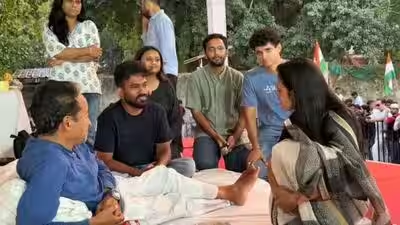
Trinamool Congress (TMC) MP Mahua Moitra has urged educator and climate activist Sonam Wangchuk to end his indefinite hunger strike, saying his campaign has already drawn nationwide attention to concerns over examination irregularities. Her appeal comes as Wangchuk’s fast entered its 17th day, with supporters expressing increasing concern over his health.
What Happened?
Mahua Moitra publicly appealed to Sonam Wangchuk to discontinue his hunger strike, arguing that his protest had succeeded in mobilising students and young people around demands for greater accountability in India’s examination system.
In her message, she acknowledged the importance of the movement but stressed that Wangchuk’s health should now take priority. Her appeal follows reports that his physical condition has deteriorated after more than two weeks without food.
Despite repeated requests from political leaders, activists and public figures, Wangchuk has maintained that he will continue his fast until the government agrees to engage in meaningful dialogue over the issues raised by the protest.
How Credible Is This Development?
This is a confirmed development.
Mahua Moitra’s appeal was made publicly through her official social media account and has been reported by multiple established news organisations. Updates regarding Wangchuk’s health have also been shared by protest organisers and covered by national media.
While there is no major dispute over the fact that the appeal was made, the broader political debate surrounding the protest and its demands remains contested among different stakeholders.
Why Is Wangchuk Protesting?
The ongoing protest centres on demands for greater accountability over alleged examination irregularities, particularly following controversy surrounding the NEET examination. Protest organisers have also called for political accountability and have urged the government to initiate discussions on their concerns.
Wangchuk joined the agitation with an indefinite hunger strike after arguing that earlier attempts at dialogue had failed to produce meaningful progress. Since then, the protest has attracted support from several opposition politicians, student groups and public personalities.
Why This Matters
The protest extends beyond one individual’s hunger strike.
It has become part of a wider national conversation about:
- Public confidence in competitive examinations.
- Government accountability when examination controversies arise.
- The role of peaceful public protests in influencing policy decisions.
- How authorities respond to prolonged demonstrations involving well-known public figures.
For millions of students and families preparing for competitive examinations, the issue touches directly on trust in the education system.
Who Is Affected?
Several groups are directly or indirectly impacted:
- Students and aspirants: They are seeking greater transparency and fairness in examination processes.
- Government and education authorities: The protest places additional political pressure on policymakers responsible for examination administration.
- Universities and institutions: Continued debate may increase demands for reforms in examination management.
- General public: The protest has revived broader discussions about governance, accountability and peaceful democratic dissent.
Health Concerns Become Increasingly Serious
As the hunger strike continues, organisers have reported worsening health indicators, including significant weight loss and declining blood glucose levels. They have expressed concern that prolonged fasting could pose serious medical risks if it continues.
Several prominent personalities, including Mahua Moitra, have therefore appealed to Wangchuk to continue his campaign through other democratic means rather than risking further deterioration in his health.
How Are Different Stakeholders Responding?
Opposition leaders
Several opposition politicians have voiced support for the protest while simultaneously urging Wangchuk to protect his health by ending the fast.
Protest organisers
Organisers continue to insist that the movement is about accountability rather than politics. They argue that meaningful dialogue from the government remains the key demand and have questioned why formal discussions have not yet begun.
Government
As of the latest available information, there has been no indication that the government has entered direct negotiations specifically in response to Wangchuk’s latest appeal during the current phase of the hunger strike.
What Could Happen Next?
Several possible developments remain open:
- Continued public pressure could increase calls for dialogue between protest organisers and the government.
- Medical concerns may intensify if Wangchuk’s health continues to decline.
- Political debate surrounding examination reforms and accountability is likely to remain active regardless of whether the hunger strike ends soon.
- Any official response or negotiations could significantly influence the future direction of the protest.
At present, there is no confirmed indication that Wangchuk plans to end his fast voluntarily.
Analysis
Confirmed Facts: Mahua Moitra has appealed to Sonam Wangchuk to end his hunger strike, while organisers continue to report worsening health conditions and Wangchuk has reiterated his demand for government dialogue.
Analysis: The protest has evolved from an individual fast into a broader political and public discussion about examination governance, accountability and democratic protest. Regardless of its immediate outcome, the movement has succeeded in keeping concerns over examination transparency in the national spotlight. Whether it ultimately results in policy changes will depend on future engagement between the government and protest representatives.
Key Takeaways
- Mahua Moitra has appealed to Sonam Wangchuk to end his 17-day hunger strike amid growing concerns about his health.
- Wangchuk has declined to end the fast, maintaining that meaningful government dialogue is necessary before doing so.
- The protest continues to fuel national debate over examination transparency, accountability and the government’s response to public protests.