India Launchs Campaign for 2028-29 UN Security Council Seat, Unveils ‘SHANTI’ Vision
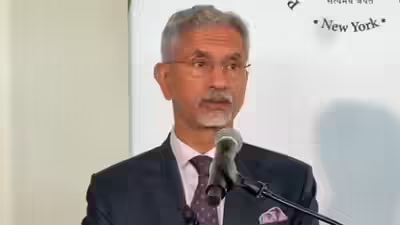
India begins diplomatic push for another term on the UN Security Council while highlighting peace, global cooperation, and reforms in international governance.
India has formally launched its campaign for election as a non-permanent member of the United Nations Security Council (UNSC) for the 2028-29 term. At an event held at the UN headquarters in New York, External Affairs Minister S. Jaishankar introduced India’s campaign theme, SHANTI—an acronym for Securing Holistic Advancement through Norms, Trust and Integrity—as the country’s guiding vision for its candidacy.
The announcement marks the beginning of India’s diplomatic outreach to secure support from UN member states ahead of the election scheduled for next year.
What Has India Announced?
India has officially entered the race for a non-permanent seat on the UN Security Council for the 2028-29 term. During the campaign launch, Jaishankar said India aims to promote a rules-based international order, strengthen global peace efforts, and ensure that the concerns of developing countries receive greater attention within the United Nations.
The SHANTI framework outlines India’s broad diplomatic priorities, including:
- Supporting reforms within the United Nations.
- Strengthening international peacekeeping.
- Promoting maritime security.
- Encouraging responsible and human-centric use of artificial intelligence.
- Combating terrorism and its financing.
- Giving stronger representation to the Global South in global decision-making.
How Credible Is This Development?
This is a confirmed and official diplomatic initiative.
The campaign was formally launched by India’s External Affairs Minister at the United Nations headquarters and has been reported by multiple established news organisations. The campaign itself represents India’s official foreign policy position rather than a proposal under discussion.
The election for the Security Council seat is expected to take place in June next year, when member countries will vote for candidates representing different regional groups.
Understanding the UN Security Council
The United Nations Security Council is one of the UN’s most influential bodies. It is responsible for maintaining international peace and security and has authority to pass legally binding resolutions, impose sanctions and authorize peacekeeping operations.
The Council consists of:
- Five permanent members with veto power — China, France, Russia, the United Kingdom and the United States.
- Ten non-permanent members elected for two-year terms by the UN General Assembly.
India has previously served eight times as a non-permanent member, most recently during 2021-22.
Why Is This Campaign Important?
India has long argued that the current structure of the UN Security Council reflects the geopolitical realities of the mid-20th century rather than today’s world.
As one of the world’s largest economies and the most populous country, India believes developing nations deserve stronger representation in international institutions. New Delhi has consistently called for reforms that would make the Security Council more representative and effective.
This campaign also allows India to reinforce its diplomatic image as a country that supports dialogue, multilateral cooperation and development partnerships, particularly among developing nations.
Who Could Be Affected?
India
A successful election would strengthen India’s diplomatic influence and allow it to participate more directly in discussions on international security, conflicts and sanctions.
Developing Countries
India has repeatedly positioned itself as a voice for the Global South. Countries seeking greater representation in global governance may view India’s campaign positively if it continues advocating for reforms.
United Nations
The campaign also keeps attention on broader debates about modernising international institutions. Although India’s current bid is for a non-permanent seat, it is closely linked to its long-standing demand for wider UN reforms.
Competing Candidates
India is expected to contest the Asia-Pacific Group seat alongside Tajikistan, making diplomatic support from member states particularly important ahead of the vote.
Potential Impact in the Short and Long Term
Immediate Impact
- India will begin extensive diplomatic outreach to gather support from UN member countries.
- Bilateral meetings and international engagements are likely to focus partly on building backing for the campaign.
Long-Term Impact
If elected, India would return to the Security Council for another two-year term, giving it greater participation in discussions involving global conflicts, peacekeeping operations and international security.
More broadly, the campaign keeps international attention on India’s broader objective of reforming the UN system to better reflect today’s geopolitical landscape. However, changes to the Council’s permanent membership remain a separate and far more complex process requiring broad international agreement.
How Are Stakeholders Likely to Respond?
Indian Government: Officials are presenting the campaign as an opportunity to strengthen multilateral cooperation while promoting peace, trust and equitable global development.
UN Member States: Countries will evaluate India’s candidacy alongside regional considerations, diplomatic relationships and its international engagement before voting.
Foreign Policy Experts: Many analysts view India’s campaign as part of its broader effort to increase its role in global governance. At the same time, experts note that wider UN reforms remain politically challenging because they require consensus among major powers.
What Should Readers Expect Next?
The focus now shifts to diplomatic outreach before the election next year.
India is expected to engage with governments across different regions to secure support for its candidacy while continuing to advocate for UN reforms and greater representation for developing nations.
The outcome of the campaign will become clearer as countries publicly declare support or negotiate regional backing ahead of the General Assembly vote.
Key Takeaways
- India has officially launched its campaign for a non-permanent UN Security Council seat for the 2028-29 term under the SHANTI vision.
- The initiative reflects India’s broader goal of expanding its role in global diplomacy while advocating reforms to international institutions and stronger representation for developing countries.
- The next major milestone will be the UN election next year, when member states vote to determine who will occupy the available Security Council seats.