Australia to Supply Uranium to India: What the Landmark Deal Really Means
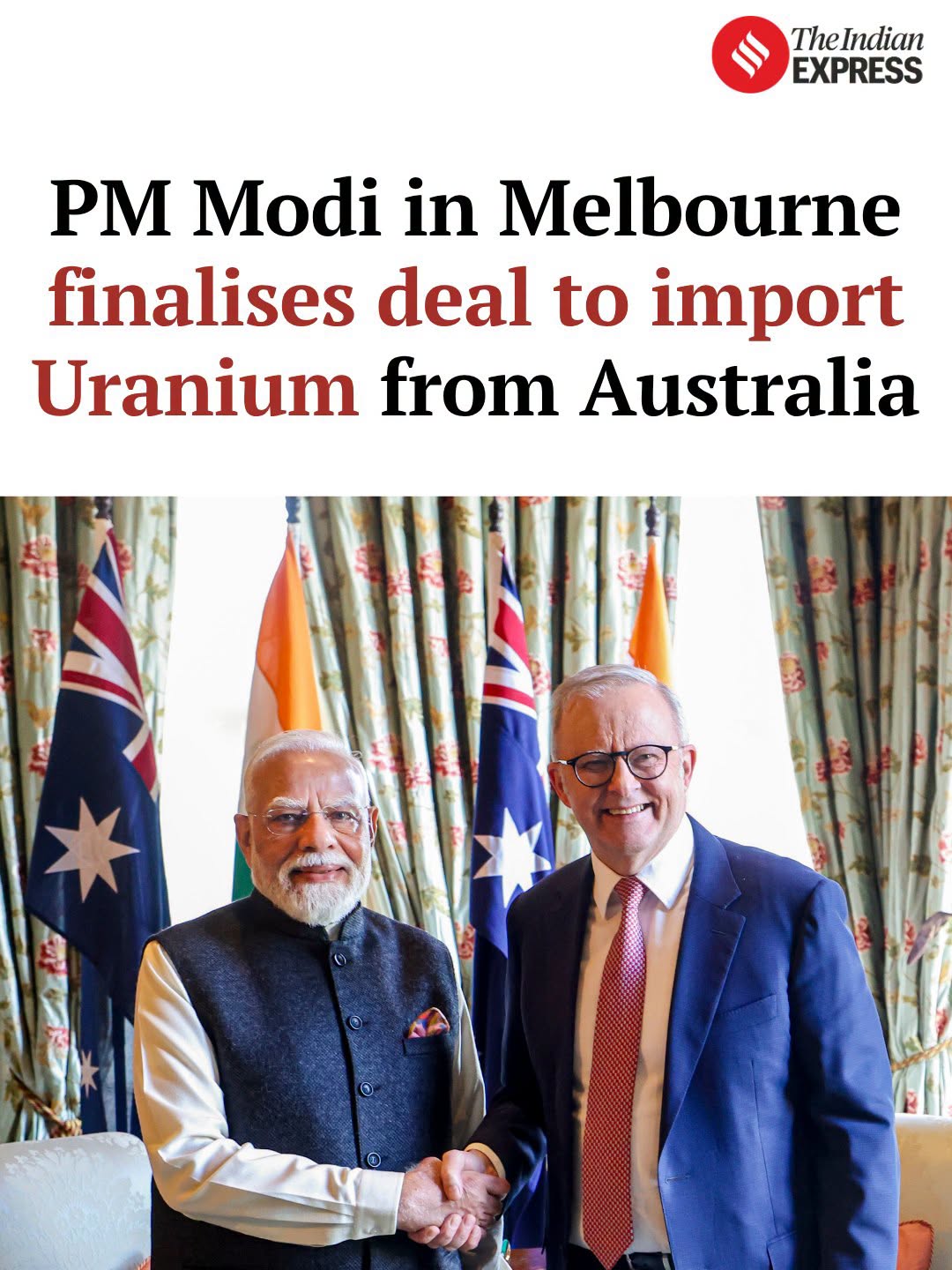
India and Australia have finalized the administrative arrangements needed for Australia to begin supplying uranium for India’s civilian nuclear energy programme. While the two countries signed a civil nuclear cooperation agreement in 2014, this latest step removes a key implementation hurdle and opens the door for commercial uranium exports. The announcement came during Prime Minister Narendra Modi’s visit to Australia, where both countries also expanded cooperation in defence, maritime security, critical minerals, cybersecurity, and emerging technologies.
Rather than being just another trade agreement, the development represents a strategic shift in energy, diplomacy, and regional security. Here’s a closer look at what has happened, why it matters, and what comes next.
The Core News: What Has Been Announced?
Australia will now be able to commercially export uranium to India for peaceful civilian nuclear use after both governments completed the required administrative arrangements under their existing civil nuclear cooperation framework.
The uranium will be used only in nuclear reactors that are subject to international safeguards, meaning the fuel is intended exclusively for electricity generation and other civilian purposes rather than military use. This distinction has been central to negotiations between the two countries for more than a decade.
Alongside the uranium agreement, India and Australia also announced greater collaboration in:
- Defence cooperation
- Maritime security
- Critical minerals
- Cybersecurity
- Emerging technologies
- Supply-chain resilience
Taken together, these agreements signal a broader strengthening of the India-Australia strategic partnership rather than a standalone energy deal.
How Credible Is This News?
This is confirmed official policy, not speculation.
The announcement has been jointly confirmed by the governments of India and Australia and has been independently reported by multiple international news organizations. It is not a proposal under discussion or an unofficial leak.
However, one important point deserves attention:
Commercial uranium exports are now legally and diplomatically possible, but neither government has publicly announced detailed information such as:
- The quantity of uranium to be supplied
- Commercial pricing
- Which Australian mining companies will participate
- Exact delivery schedules
Those commercial details are expected to emerge over time as individual contracts are negotiated.
Why Is This Deal Significant?
At first glance, the agreement appears to be about uranium. In reality, it touches three major issues:
1. India’s Growing Energy Demand
India’s electricity consumption continues to rise due to:
- Industrial growth
- Urbanization
- Expanding digital infrastructure
- Electric vehicles
- Data centres
- Artificial intelligence infrastructure
Meeting this demand while reducing carbon emissions is a major policy challenge.
Unlike solar and wind power, nuclear power generates electricity around the clock, making it an important source of reliable “baseload” energy that does not depend on weather conditions.
2. India’s Limited Domestic Uranium Resources
India has uranium reserves but not enough high-quality domestic production to comfortably support its long-term nuclear expansion plans.
Australia possesses one of the world’s largest known uranium reserves, making it an attractive long-term supplier. Stable imports can improve fuel security for India’s expanding nuclear fleet.
3. A Strategic Partnership Beyond Energy
The agreement also reflects changing geopolitical priorities.
India and Australia increasingly cooperate on:
- Indo-Pacific security
- Supply-chain resilience
- Critical minerals
- Defence
- Maritime security
As regional strategic competition intensifies, both countries have been strengthening ties with other democratic partners while expanding economic cooperation. The uranium agreement fits within that broader relationship.
Why Did It Take So Long?
Although India and Australia signed a civil nuclear cooperation agreement in 2014, commercial uranium exports did not begin immediately.
One major reason was India’s unique international position.
India has never signed the Nuclear Non-Proliferation Treaty (NPT), which historically made Australia cautious about uranium exports. Over time, international arrangements, including safeguards monitored by the International Atomic Energy Agency (IAEA), helped create a framework that allowed civilian nuclear cooperation while maintaining oversight.
The latest agreement effectively turns that earlier diplomatic framework into an operational commercial arrangement.
Who Benefits the Most?
India
Potential advantages include:
- More secure uranium supplies
- Greater fuel availability for civilian nuclear reactors
- Support for long-term clean electricity generation
- Reduced dependence on a smaller number of uranium suppliers
- Stronger strategic ties with Australia
Reliable fuel supplies become increasingly important as India seeks to expand nuclear generation over the coming decades.
Australia
Australia also gains significant benefits.
Potential advantages include:
- New export opportunities for its uranium industry
- Higher resource exports
- Stronger economic ties with one of the world’s fastest-growing major economies
- Expanded strategic influence in the Indo-Pacific region
For Australia, the agreement converts large natural uranium reserves into a new long-term export opportunity.
Nuclear Energy Sector
Companies involved in:
- Uranium mining
- Nuclear fuel processing
- Reactor operations
- Nuclear engineering
- Energy infrastructure
may all benefit if India’s nuclear expansion continues over the coming decades.
Who Could Face Challenges?
While the agreement has clear advantages, it also raises legitimate concerns.
Environmental Groups
Some environmental organizations remain cautious because uranium mining can affect:
- Local ecosystems
- Water resources
- Indigenous communities near mining sites
In addition, radioactive waste management remains a long-term issue for every country that relies on nuclear power.
Nuclear Safety Advocates
Although modern reactors include extensive safety systems, nuclear energy always requires:
- Strict regulation
- Continuous monitoring
- Safe waste storage
- Strong emergency preparedness
Supporters argue nuclear power is among the lowest-carbon energy sources, while critics emphasize that accidents, although rare, can have severe consequences.
Geopolitical Sensitivities
Because uranium is associated with nuclear technology, such agreements often attract international scrutiny.
Both governments stress that exports are intended solely for peaceful civilian use under international safeguards, but nuclear cooperation can remain politically sensitive in some parts of the world.
What Could This Mean for India’s Energy Future?
If India successfully expands its nuclear capacity, several long-term outcomes are possible:
Cleaner Electricity
Nuclear plants produce electricity with very low direct carbon emissions compared with coal-fired power stations.
More Reliable Power Supply
Unlike solar and wind energy, nuclear reactors can generate electricity continuously, helping stabilize the power grid.
Reduced Dependence on Fossil Fuels
Greater nuclear generation could gradually reduce reliance on imported fossil fuels while complementing renewable energy.
However, building new nuclear plants remains expensive and time-consuming. Even with fuel security, projects often require years of planning, regulatory approvals, financing, and construction before producing electricity.
What Happens Next?
The agreement is an important milestone, but it is only the beginning of a longer process.
Over the coming months and years, observers should watch for:
- Commercial uranium supply contracts
- Identification of Australian suppliers
- Delivery schedules
- Expansion of India’s nuclear generation capacity
- Progress on other India-Australia agreements covering defence, critical minerals, and emerging technologies
The overall impact will depend not only on uranium exports but also on how effectively both countries implement their broader strategic partnership.
The Bottom Line
Australia’s decision to begin commercial uranium exports to India marks an important development in both countries’ relationship. It strengthens India’s long-term energy security while creating new opportunities for Australia’s resource sector.
The agreement is based on official government arrangements rather than speculation, making it a credible and significant diplomatic achievement. At the same time, its real-world impact will unfold gradually as commercial contracts are signed and nuclear energy projects move forward.
For India, the deal supports ambitions to diversify energy sources and expand low-carbon electricity generation. For Australia, it deepens ties with a major strategic partner in the Indo-Pacific.
Whether the agreement ultimately transforms India’s energy landscape will depend less on the announcement itself and more on the pace of implementation, investment, regulatory approvals, and future cooperation between the two nations.