Escalation in the Gulf: Why Sirens in Bahrain and Kuwait Signal a Wider Regional Crisis
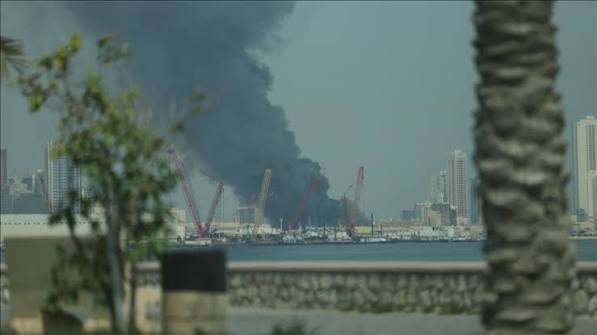
Military tensions in the Middle East intensified on Thursday after fresh exchanges between the United States and Iran triggered security alerts across Gulf countries. Air raid sirens sounded in Bahrain, while Kuwait reported intercepting hostile drones, highlighting how the conflict is increasingly affecting countries beyond the main battlefield.
The situation remains fast-moving, with governments issuing official statements while international observers continue to monitor developments. Although several military actions have been confirmed by officials, some battlefield claims from the opposing sides have not yet been independently verified.
What Happened?
The latest escalation followed a new round of US military strikes on Iranian targets. Around the same time, US Central Command announced that it had stopped an oil tanker that it said was attempting to breach Washington’s renewed naval blockade on Iranian ports.
Soon afterwards, Bahrain activated emergency sirens and advised residents to move to safe locations. Kuwait’s military said its air defence systems intercepted drones it described as originating from Iran. Iran’s Revolutionary Guard, meanwhile, claimed responsibility for targeting US military facilities in Bahrain, while Jordan also reported intercepting incoming missiles.
How Credible Is This News?
The broad sequence of events has been confirmed through official statements issued by governments and military authorities involved in the conflict.
However, several battlefield claims—including the exact extent of damage, casualty figures and the effectiveness of individual strikes—remain difficult to verify independently because the conflict is ongoing. Different governments continue to present competing accounts of military operations, making caution important when interpreting early reports.
Why This Matters
The latest developments show that the confrontation is no longer limited to direct US-Iran exchanges. Gulf nations hosting American military facilities are increasingly becoming part of the conflict’s security landscape.
This is particularly significant because the Gulf region contains critical energy infrastructure and major shipping routes that support global oil exports. Any disruption in these areas has the potential to affect international energy markets, shipping costs and global inflation.
The Strait of Hormuz remains central to the crisis. The narrow waterway handles a significant share of the world’s seaborne oil trade, meaning military activity around it attracts worldwide attention from governments, businesses and financial markets.
Why the Oil Tanker Incident Is Important
One of the most closely watched developments was the US action against an oil tanker that officials said ignored repeated warnings while attempting to reach an Iranian port despite the renewed blockade.
Washington described the operation as enforcement of its maritime restrictions, while Tehran continues to reject the legitimacy of those measures.
Although the vessel itself was not carrying out military operations, the incident illustrates how commercial shipping is becoming increasingly vulnerable as geopolitical tensions rise. Shipping companies may now face higher insurance costs, longer routes and greater operational risks if the security situation deteriorates further.
Who Is Most Affected?
Several groups could experience the consequences of the growing conflict:
- Residents of Gulf countries face increased security concerns whenever missile or drone alerts are activated.
- International shipping companies must navigate a more dangerous operating environment.
- Energy markets remain sensitive to any disruption involving the Strait of Hormuz.
- Airlines and logistics operators may need to adjust routes if regional airspace restrictions expand.
- Businesses dependent on stable oil prices could face increased costs if energy markets become more volatile.
Reactions from Different Stakeholders
The United States maintains that its military actions are intended to protect maritime security and enforce restrictions on Iranian shipping.
Iran argues that its actions are defensive responses to US military operations and what it considers unlawful pressure.
Meanwhile, Gulf governments have focused primarily on protecting their territory and civilian populations by activating air defence systems and issuing public safety advisories.
International observers continue to call for restraint, warning that additional retaliation could increase the risk of a broader regional conflict.
What Could Happen Next?
Several developments will likely determine the direction of the crisis:
- Additional military exchanges remain possible if retaliation continues.
- Shipping activity through the Gulf will remain under close international monitoring.
- Oil markets may continue reacting to developments around the Strait of Hormuz.
- Diplomatic efforts could intensify if regional governments seek to prevent further escalation.
At present, there is no clear indication that the conflict is close to ending, and the situation continues to evolve rapidly. Any new military action could quickly change the regional security picture.
Analysis: Why This Conflict Has Global Importance
Although the military operations are taking place in the Middle East, their effects extend far beyond the region.
The Gulf plays a central role in global energy supplies, international shipping and strategic military alliances. Even limited disruptions can influence fuel prices, transportation costs and investor confidence worldwide.
For policymakers, the challenge is preventing the conflict from drawing additional countries into direct military involvement. For businesses, the priority will be managing uncertainty around energy supplies and shipping routes. For ordinary citizens, especially those living in Gulf countries, safety remains the immediate concern as governments respond to evolving security threats.
Key Takeaways
- Military tensions between the United States and Iran have expanded beyond direct confrontation, prompting security alerts in Bahrain and Kuwait.
- The Strait of Hormuz remains the strategic centre of the crisis, making global energy markets and international shipping especially vulnerable.
- While many official developments have been confirmed, several battlefield claims remain independently unverified, meaning the situation should be viewed as an evolving story rather than a settled outcome.