Airtel Looks Beyond Telecom After ₹3.3 Lakh Crore Investment, Plans Expansion in Cloud, Financial Services and Data Centres
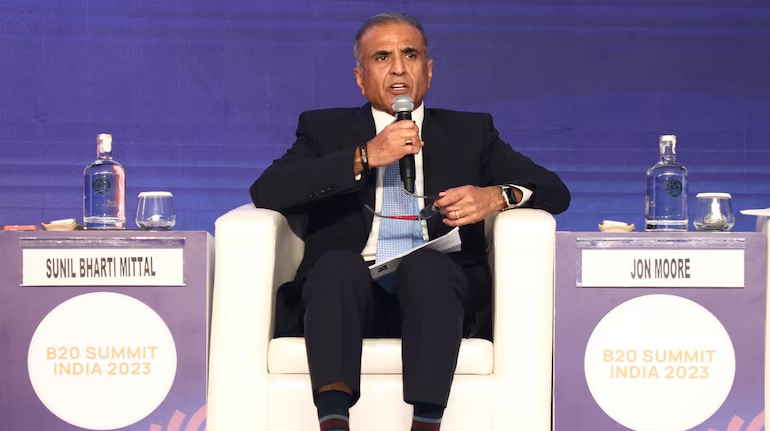
After spending more than ₹3.3 lakh crore over the past decade to strengthen its telecom network and digital infrastructure, Bharti Airtel says its next phase of growth will come from businesses beyond traditional mobile services. The company plans to expand its presence in cloud computing, digital financial services and data centres as it prepares for changing technology demands and new revenue opportunities.
What Has Happened?
Bharti Airtel Chairman Sunil Bharti Mittal has told shareholders that the company is entering a new stage of growth after years of heavy investment in network infrastructure.
According to Airtel’s latest annual report, the telecom operator believes three businesses can become major long-term growth drivers:
- Cloud computing services for businesses
- Digital financial services through its NBFC operations
- Data centres that store and process digital information
The announcement reflects Airtel’s strategy of reducing its dependence on telecom revenues while benefiting from India’s rapidly expanding digital economy.
How Credible Is This Development?
This is a confirmed corporate announcement.
The information comes directly from Bharti Airtel’s annual report and statements made by Chairman Sunil Bharti Mittal to shareholders. Similar details have also been reported by multiple established financial news organisations.
There is currently no significant dispute regarding Airtel’s stated strategy. However, the pace and success of these expansion plans will depend on future investments, market demand and regulatory developments.
Why Is Airtel Moving Beyond Telecom?
India’s telecom industry has matured significantly.
While mobile subscribers continue to grow, operators are increasingly looking for new sources of income after making massive investments in 5G infrastructure.
Instead of relying only on mobile and broadband services, Airtel wants to build businesses that can benefit from:
- Growing cloud adoption by companies
- Rising demand for artificial intelligence (AI) computing
- Increasing digital payments and lending
- Data localisation requirements that encourage companies to store data within India
This allows Airtel to use its existing digital infrastructure while serving enterprise customers in addition to individual mobile users.
Understanding Airtel’s Three Focus Areas
Cloud Computing
Cloud computing allows businesses to rent computing power, storage and software over the internet instead of maintaining expensive physical servers.
As more Indian businesses digitise their operations, demand for domestic cloud services is expected to increase.
Data Centres
Data centres are specialised facilities that house servers responsible for storing websites, applications and digital information.
The growth of AI, video streaming, online banking and government digital services has sharply increased the need for such infrastructure.
Airtel has already announced plans to significantly expand its data centre capacity over the coming years.
Financial Services
Airtel is also expanding through digital lending and financial products after strengthening its financial services business.
Its NBFC platform is expected to offer credit products by leveraging Airtel’s digital ecosystem while operating under financial regulations.
Why Does This Matter?
Airtel’s strategy reflects a broader shift taking place across the global telecom industry.
Many telecom companies are no longer positioning themselves only as network providers. Instead, they are becoming digital infrastructure companies that offer technology services to businesses, governments and consumers.
For India, stronger investment in cloud infrastructure and data centres could support:
- AI development
- Digital businesses
- Start-ups
- Enterprise technology
- Government digital initiatives
It may also reduce dependence on overseas infrastructure for storing sensitive digital information.
Who Could Benefit?
Potential beneficiaries
- Businesses seeking Indian cloud infrastructure
- Start-ups requiring scalable digital services
- Enterprises expanding AI and data operations
- Construction and technology suppliers building digital infrastructure
- Employment in technology, engineering and data centre operations
Possible challenges
The expansion will also intensify competition among companies operating in:
- Cloud computing
- Digital lending
- Data centres
- Enterprise technology services
Large investments in these sectors also require significant capital and long-term demand before generating meaningful returns.
Market and Industry Perspective
Industry trends suggest that demand for data centres and cloud infrastructure is increasing because of AI applications, stricter data storage requirements and digital transformation across businesses.
Airtel believes this provides an opportunity to strengthen its enterprise business while using the digital infrastructure it has already built over the past decade.
However, analysts generally note that success in these businesses will depend on execution, customer adoption and continued investment rather than telecom scale alone.
How Are Stakeholders Likely to Respond?
Investors: Many investors may view diversification positively because it creates additional revenue streams beyond telecom services. However, they will also monitor the cost of expansion and profitability.
Businesses: Enterprise customers could benefit from having another major domestic provider for cloud and digital infrastructure.
Government: India’s broader push for digital infrastructure, AI capability and local data storage aligns with increased private-sector investment in these areas.
Competitors: Other telecom and technology companies are also expanding into cloud, financial technology and data infrastructure, making competition likely to intensify.
What Happens Next?
Readers should expect Airtel to continue investing in these new businesses over the coming years while expanding its enterprise offerings.
The company’s future announcements are likely to focus on:
- New cloud service capabilities
- Expansion of data centre capacity
- Growth in digital lending operations
- Partnerships with technology companies
- Enterprise customer acquisitions
Whether these businesses become major contributors to Airtel’s revenue will become clearer as investments are executed and demand evolves.
Key Takeaways
- Bharti Airtel says its next phase of growth will come from cloud computing, financial services and data centres after investing over ₹3.3 lakh crore in telecom infrastructure over the past decade.
- The strategy is officially confirmed through the company’s annual report and reflects a wider industry shift from traditional telecom services toward digital infrastructure businesses.
- The long-term success of this plan will depend on execution, customer demand, competition and continued investment rather than telecom growth alone.